Table of Contents
Single precision screwdrivers are generally better for products requiring one known screw size, repeated fastening tasks, or compact accessory bundles. Multi-bit precision screwdrivers are more suitable when several screw types must be supported in one product. For wholesale and OEM sourcing, the right choice depends on fastener compatibility, product positioning, packaging, cost, and repeat-order requirements.
This article compares the two formats from a sourcing perspective, including real applications, technical requirements, retail presentation, and customization options.
The main difference is how many fastening requirements each product is designed to support.
A single precision screwdriver is typically supplied for a specific task or screw size. However, single screwdriver does not always mean fixed-tip screwdriver. Some individually sold models have fixed tips, while others use a removable or interchangeable bit.
Multi-bit precision screwdrivers combine one handle with several interchangeable bits. Pen-style models are one form of this design, often using internal magnetic storage instead of a separate bit case.
Comparison |
Single Precision Screwdriver |
Multi-Bit Precision Screwdriver |
|---|---|---|
Primary Function |
Dedicated fastening task |
Multiple screw profiles or sizes |
Tip Configuration |
Fixed or selected replaceable tip |
Several interchangeable bits |
Common Applications |
Product installation, repair accessories, defined maintenance tasks |
Electronics maintenance, mixed-device servicing |
Storage |
Individual tool or simple packaging |
Integrated bit storage or separate case |
Main Sourcing Priority |
Exact tip fit and task suitability |
Bit compatibility, retention and complete configuration |
Product Positioning |
Dedicated tool or accessory |
Standalone multifunction tool |
A multi-bit product is not automatically the better option. Its additional components must provide value for the intended application.
Key Point:
Define the fastening requirements before comparing screwdriver formats. A dedicated screwdriver can be more suitable than a multi-bit set when the application is already known.
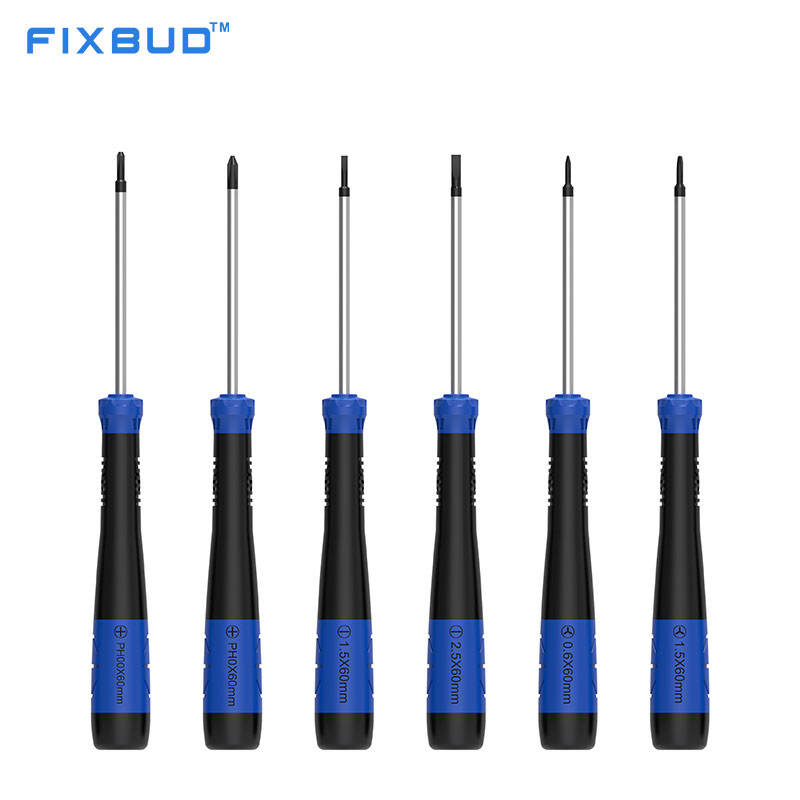
Mini PH / SL / Y Type Magnetic Screwdriver with S2 Steel Bit
Single screwdrivers make sense when the required screw profile and size are clearly defined, particularly for products sold with installation accessories or used in repetitive maintenance.
Some electronics and hardware accessories require a screwdriver for installation or replacement.
Examples include:
For these products, including one appropriately sized screwdriver may be more practical than providing several interchangeable bits.
The tool can be packed with the accessory, reducing the need for a separate screwdriver purchase.
However, compatibility must be confirmed against the actual fastener. A generic screwdriver should not be described as suitable for every product within a category.
Repair and assembly operations sometimes rely on a limited number of fastener specifications.
A dedicated screwdriver avoids the need to select and exchange bits during every operation.
It also provides a consistent handle-and-tip configuration, which may be useful when standardizing tools across workstations.
The handle design, tip geometry, working length, and required torque still need to match the application.
A useful example comes from a FIXBUD custom mini screwdriver project.
A North American customer required 1.5mm and 2.5mm Slotted screwdrivers rather than a general-purpose set.
FIXBUD used an existing 93mm mini screwdriver design as the product base and arranged samples for fit verification.
The important issue was not simply the nominal tip width. Tip thickness, shape, and actual screw engagement also needed to be considered.
This project illustrates why specification-driven orders may benefit from a dedicated tool rather than a broader screwdriver assortment.
Read the custom 1.5mm and 2.5mm mini screwdriver case.
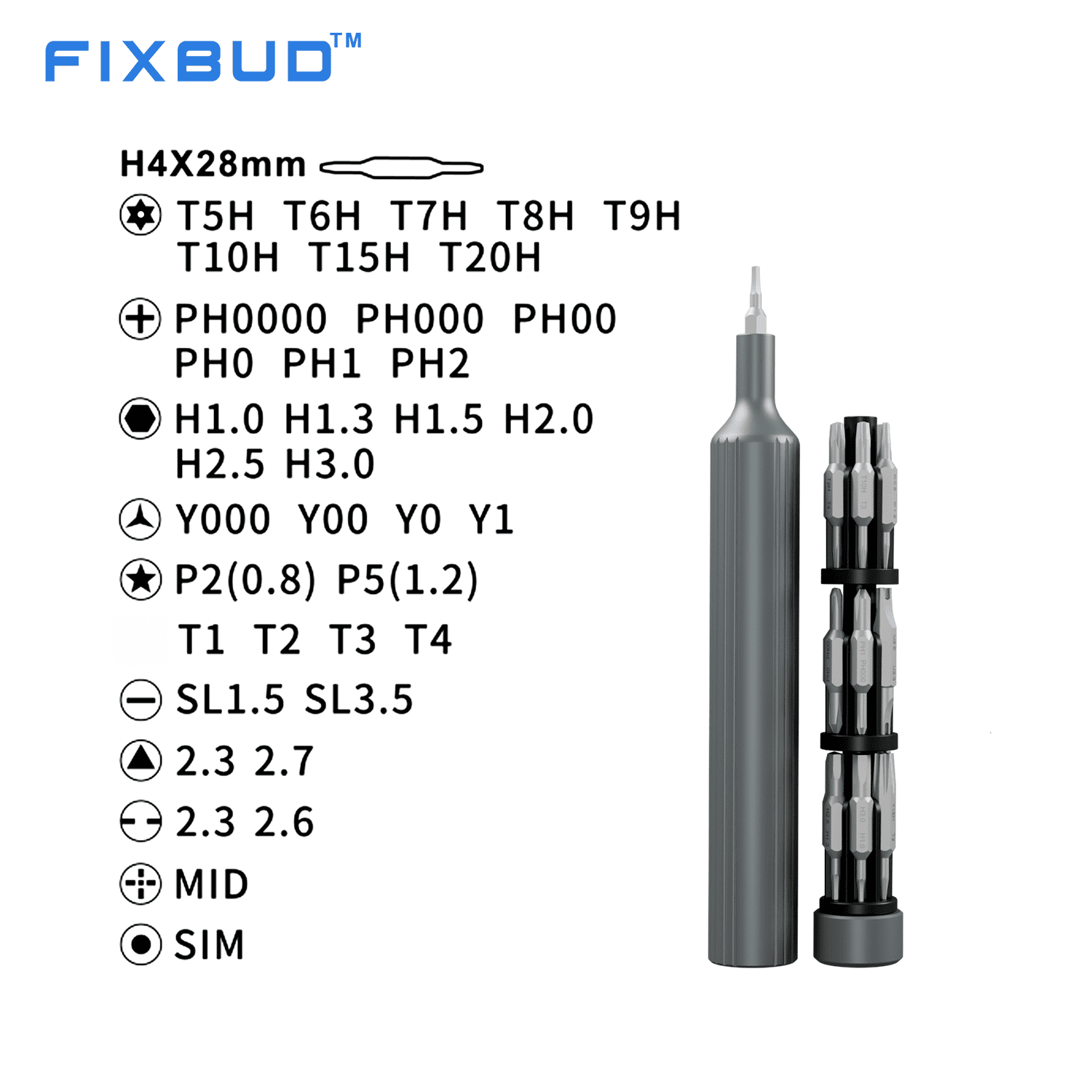
Multi-Bits Precision Pen Screwdriver Set
Multi-bit screwdrivers are more useful when the product must handle several fastening requirements without requiring multiple individual tools.
Electronics maintenance can involve several screw profiles and sizes.
A portable multi-bit screwdriver may support selected work on laptops, cameras, controllers, small electronic products, and other devices, provided the included bits are compatible.
For example, one product might require Phillips bits, while another uses Torx or Hex fasteners.
A multi-bit format allows the required tools to be stored together.
However, screw compatibility should be verified by device or component. A larger assortment does not guarantee complete repair coverage.
For a product sold independently, the multi-bit configuration becomes part of its value proposition.
Customers can evaluate the available screw profiles, handle design, storage method, and overall versatility.
Pen-style screwdrivers are particularly relevant to compact retail tool ranges because the bits can be stored within the handle.
FIXBUD offers two useful examples:
Product |
Configuration |
Product Position |
|---|---|---|
27-in-1 Pen Screwdriver |
13 double-ended S2 bits, 26 working tips |
Compact multi-bit tool |
39-in-1 Pen Screwdriver |
19 double-ended S2 bits, 38 working tips |
Broader bit coverage in a pen-style format |
The 27-in-1 magnetic pen screwdriver uses an aluminum-alloy handle with magnetic bit storage. The 39-in-1 pen screwdriver offers more working tips while retaining a compact design. Both provide alternatives to individual screwdrivers without requiring a large repair tool case.
A multi-bit model may also be appropriate when a brand sells accessories for several device categories.
Instead of developing a different individual screwdriver for every application, the brand can evaluate a configuration containing the most relevant bit profiles.
The final selection should still reflect actual fastener requirements, not just the number printed on the package.
Product format is only one part of the selection process. A screwdriver must also work correctly with its intended fasteners.
Confirm the exact screw profile and size.
Phillips, Torx, Hex, Slotted, Pentalobe, and other precision fasteners require different tip geometries.
Even when the nominal size is correct, an unsuitable tip profile can cause slipping or damage.
For small Slotted screws, tip width and thickness both matter. For interchangeable-bit systems, the finished working tip and its connection to the handle must be checked.
A screwdriver may fit the screw head but still fail to reach the fastening position.
Consider:
This is particularly important for recessed screws and narrow openings.
A compact pen-style handle may be convenient for storage but should not be assumed to fit every restricted-access application.
For single screwdrivers, evaluate the grip, rotating end cap where applicable, and comfort during the intended task.
For multi-bit products, additional checks include:
Magnetic retention can support bit storage and screw handling, but it should be tested on the finished product.
Steel selection alone does not determine screwdriver quality.
The finished tool should be assessed for tip accuracy, hardness, applicable torque requirements, and functional performance.
Acceptance criteria should reflect the actual application. Precision screwdrivers should not be evaluated using unrelated heavy-duty fastening requirements.
Technical Takeaway:
First verify that the screwdriver fits and reaches the intended screws. Then evaluate handling, retention, and mechanical performance.
Packaging is an important sourcing difference because single and multi-bit products communicate their value in different ways.
A dedicated screwdriver can be packaged individually or supplied inside another product's packaging.
For accessory bundles, useful requirements include clear tip-size identification, compact dimensions, and protection against damage in transportation.
For standalone retail sales, the package should help customers identify the screwdriver type and intended application.
Multi-bit products need to communicate what is included.
A closed pen-style handle may look similar to an ordinary screwdriver even though it contains several interchangeable bits.
Retail packaging should therefore make the bit configuration understandable without requiring the product to be opened.
FIXBUD addressed this issue in a 27-in-1 pen screwdriver packaging project for a supermarket customer in the Middle East.
The customer needed better visibility of the screwdriver and its internal bits.
The final design used a hanging double-blister package that displayed the handle and bit section separately. The packaging structure was also adapted to secure the components during handling and transportation.
See the 27-in-1 pen-style screwdriver packaging case.
For e-commerce and retail procurement, packaging specifications should also cover product visibility, barcode placement, dimensions, carton quantities, and protection during fulfillment.
Packaging Advice:
Single screwdrivers need clear specification identification. Multi-bit products also need packaging that explains their contents and storage system.
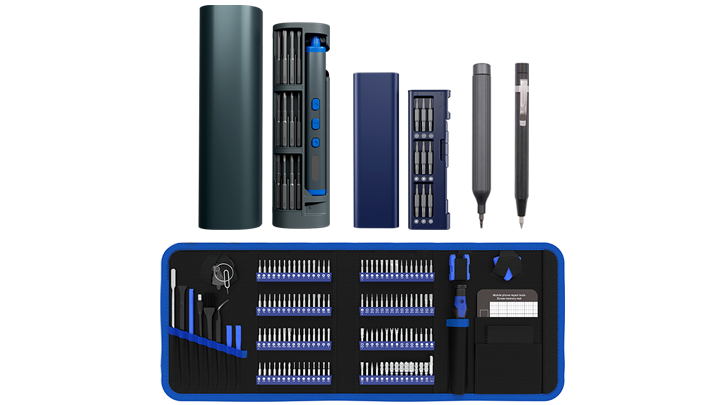
Precision Screwdriver Set Options for Electronics Repair
There is no universal cost advantage. The comparison depends on what is included and how the product will be sold.
A single screwdriver generally has a simpler component structure, especially when it uses one fixed tip.
A multi-bit screwdriver adds interchangeable bits, storage features, and potentially more complex assembly and packaging.
However, purchasing several individual screwdrivers may also increase packaging and inventory requirements.
Cost Factor |
Single Screwdriver |
Multi-Bit Screwdriver |
|---|---|---|
Main Components |
Handle and selected tip |
Handle, multiple bits and storage |
Packaging |
Individual pack or accessory bundle |
Product pack displaying complete configuration |
Inventory |
Separate SKUs for different tip sizes |
Several tip sizes within one SKU |
Replacement Needs |
Complete screwdriver or specified component |
Individual bits or complete set, depending on design |
Retail Position |
Dedicated tool or accessory |
Multifunction tool with broader applications |
A useful quotation comparison should go beyond unit price.
For example, a retailer comparing a single screwdriver with a pen-style set should consider the finished product cost, retail packaging, carton dimensions, and intended selling price.
An electronics accessory brand bundling a screwdriver with an existing product should instead consider the total cost of the complete accessory package.
For repair service procurement, replacement frequency and availability may be more important than retail presentation.
Cost Takeaway:
Compare the total cost of delivering the required function, not just the factory price of one screwdriver.
Offering both formats can be justified when they meet different product requirements.
For example, an electronics accessories brand could use a dedicated mini screwdriver as an installation tool while selling a pen-style multi-bit screwdriver as a separate maintenance accessory.
A tool brand might also offer single screwdrivers for commonly used sizes alongside multi-bit models for broader repair applications.
The important consideration is whether the products have distinct purposes.
FIXBUD's 93mm mini precision screwdriver provides an example of a compact screwdriver that can be configured with selected tip types and lengths.
The 27-in-1 and 39-in-1 pen screwdrivers offer alternatives when built-in bit storage and several working tips are required.
Before introducing multiple SKUs, define what each product adds to the range. Different appearances or bit counts alone may not justify overlapping products.
Once the product format has been selected, the next step is to define specifications that a manufacturer can evaluate and quote.
Specification |
Information to Provide |
|---|---|
Product Format |
Single screwdriver, selected interchangeable-bit tool, or multi-bit set |
Tip Requirements |
Profiles, sizes and working lengths |
Materials |
Handle and bit material requirements |
Handle Design |
Dimensions, grip and rotating cap if required |
Bit Storage |
Magnetic or other retention method, where applicable |
Branding |
Logo, color and identification markings |
Packaging |
Accessory bundle, retail box, blister pack or other format |
Order Details |
Quantity, target market and delivery requirements |
For customized orders, the approval process should include three stages.
Provide reference photographs, technical drawings, or sample fasteners where available.
If the product must work with a specific device or accessory, identify the actual fastening requirements.
This helps avoid selecting unnecessary bits or an unsuitable handle design.
Sample approval should cover functional compatibility as well as appearance.
Check screw engagement, handle operation, bit retention where applicable, and packaging fit.
A photograph or nominal specification alone is not sufficient for confirming precision-tool compatibility.
Confirm the approved sample, inspection requirements, packaging specification, order quantity, and lead time.
MOQ varies by product and customization scope.
For reference, FIXBUD's published standard MOQ for the 93mm mini screwdriver is 1,000 pieces. Neutral orders for the 27-in-1 and 39-in-1 pen screwdriver start at 100 sets, and customized orders generally start at 500–1,000 sets.
These are model-specific reference quantities, not universal requirements for every OEM project.
FIXBUD supports customization of selected screwdriver configurations, bit types, handle colors, logos, and packaging. Production feasibility and final terms should be confirmed against the specific project.
1. Is a single precision screwdriver always a fixed-tip tool?
No. Single screwdriver describes how the product is supplied. Depending on the design, the working tip may be fixed or replaceable. Confirm the construction before ordering.
2. Are pen-style screwdrivers suitable for professional repair applications?
They can support selected precision maintenance tasks when the bit profiles, dimensions, working lengths, and handle design match the application. They are not universal replacements for specialized repair tools.
3. Can different single screwdriver sizes be ordered under one product range?
Yes. Different tip profiles and sizes can be discussed for OEM projects. Each configuration should have clear specifications, identification, and agreed order quantities.
4. Can the bit configuration of a multi-bit screwdriver be customized?
Selected configurations can be discussed with FIXBUD. Feasibility depends on the bit dimensions, storage design, materials, production requirements, and order quantity.
5. What is the most important test before sourcing either format?
Confirm that the finished screwdriver works with the intended fastener. Tip fit, access clearance, and functional performance should be verified before approving bulk production.
Single and multi-bit precision screwdrivers serve different sourcing requirements. Dedicated screwdrivers are practical for defined fastening tasks and accessory bundles, while multi-bit models provide broader tool coverage in one product.
FIXBUD manufactures mini precision screwdrivers, pen-style screwdriver sets, and other precision repair tools for wholesale and OEM/ODM projects.
Share your intended application, required screw profiles, product format, packaging preferences, and estimated order quantity. Our team can help review suitable configurations, sample requirements, and customization options.
Discuss Your Precision Screwdriver Project → Hot News
2026-11-19
2026-11-18
2026-11-18
2026-11-17
2026-11-17
2026-11-16

FIXBUD manufactures precision screwdriver sets, bits and repair tools in China. OEM/ODM, private-label and bulk supply worldwide. Request a custom quote today.
Room 402, Building B, Getailong Zhigu, Bulong Road, Bantian Street, Longgang District, Shenzhen, Guangdong Province, China
Copyright © 2026 EWIN ENTERPRISE LTD. All rights reserved. Privacy Policy
 EN