Table of Contents
For OEM electric precision screwdriver orders, confirm battery capacity, rated voltage, charging input, USB-C compatibility, included accessories, and model-specific test documents before approving production. A charging cable does not mean a power adapter is included, and different screwdriver models may require different specifications. These details affect product performance, packaging, quotations, and import preparation.
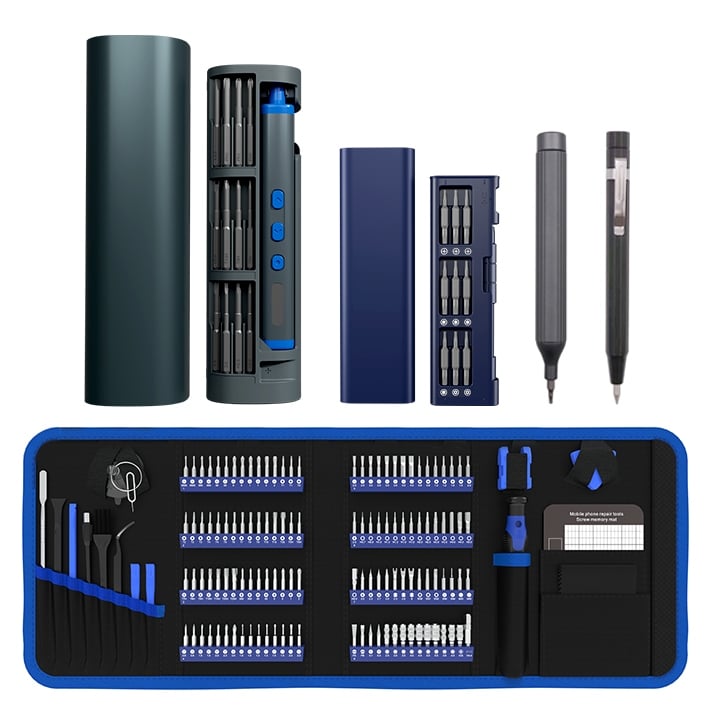
This guide explains what tool brands and importers should verify, using actual FIXBUD electric precision screwdriver configurations as examples.
OEM ODM Electric Precision Screwdriver
Battery capacity is an important specification, but it should not be evaluated independently of voltage, charging current, product design, and intended operating conditions.
The following details should be confirmed before comparing OEM models.
Most rechargeable electric precision screwdrivers use compact lithium-based batteries.
Three parameters require particular attention:
For example, a 350mAh battery and a 650mAh battery have different rated capacities. However, the larger battery does not automatically deliver proportionally longer working time.
Motor efficiency, torque settings, operating load, and electronics also affect power consumption.
Battery size designations, such as 10440 or 14430, provide additional information about the cell format. They should not be used as substitutes for the actual battery specification sheet.
A complete charging specification should identify the supported input voltage and current.
It should also explain how charging time is measured.
For example, a manufacturer's charging-time specification may depend on the starting battery level, power source, charging control, and test conditions.
When comparing products, confirm:
Key Takeaway:
Battery capacity describes only one aspect of an electric screwdriver. OEM specifications should identify both the battery and the charging system.
FIXBUD offers different electric precision screwdriver configurations for electronics repair, retail tool ranges, and OEM projects.
The following comparison illustrates why electrical specifications should be checked by model rather than assumed to be identical across a product range.
Specification |
|||
|---|---|---|---|
Battery Capacity |
350mAh |
350mAh |
650mAh |
Battery Type |
Lithium Battery |
Lithium Battery |
Confirm with final battery specification |
Battery Size |
10440 |
10440 |
14430 |
Battery Voltage |
3.7V nominal |
3.7V nominal |
3.7–4.2V stated range |
Charging Input Voltage |
4.5–6.5V |
4.5–6.5V |
4.5–6.5V |
Charging Current |
0.35A |
0.35A |
0.65A |
Charging Time |
> 60 minutes |
> 60 minutes |
< 60 minutes |
Charging Port |
USB-C |
USB-C |
USB-C |
USB Charging Cable |
Included |
Included |
Included |
External Power Adapter |
Not included |
Not included |
Not included |
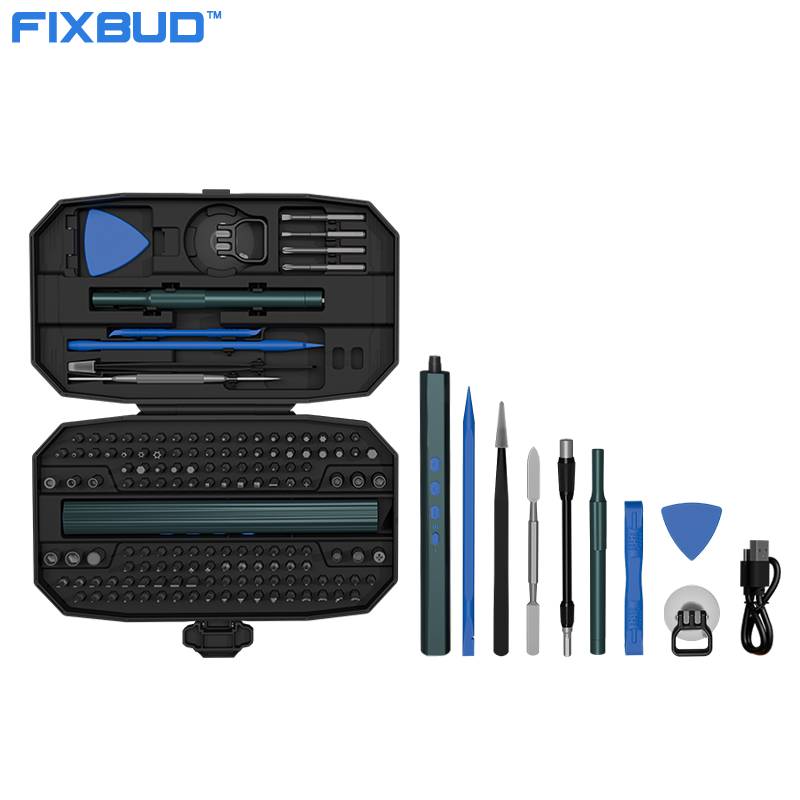
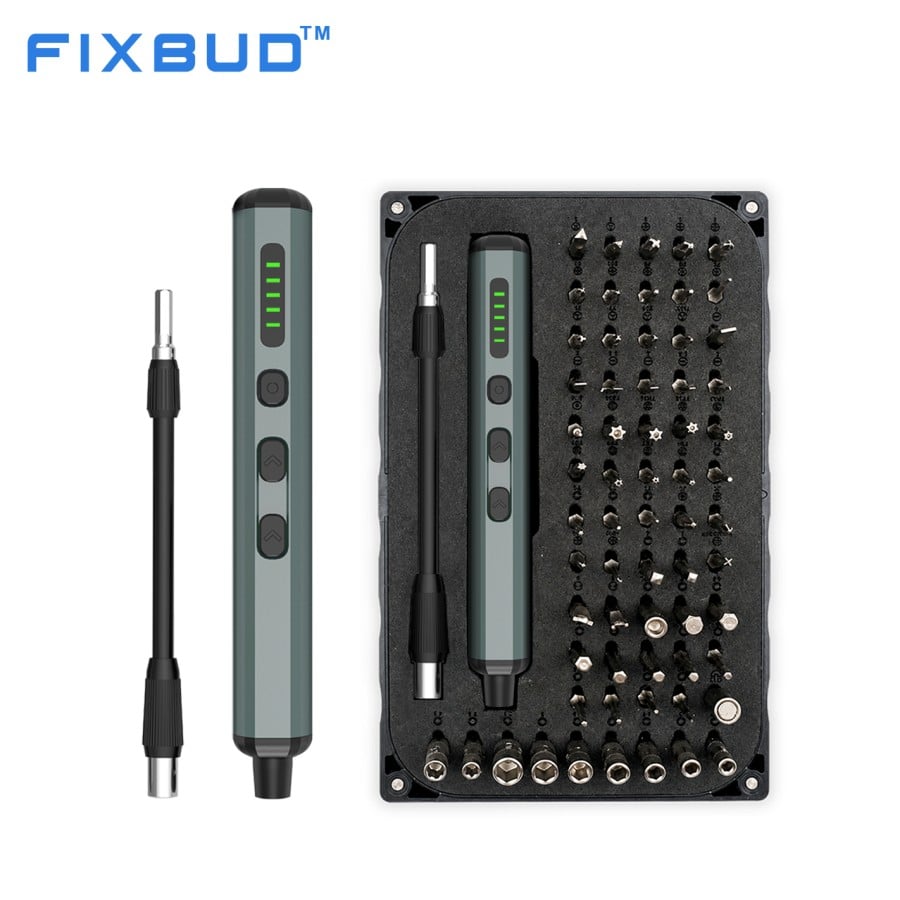
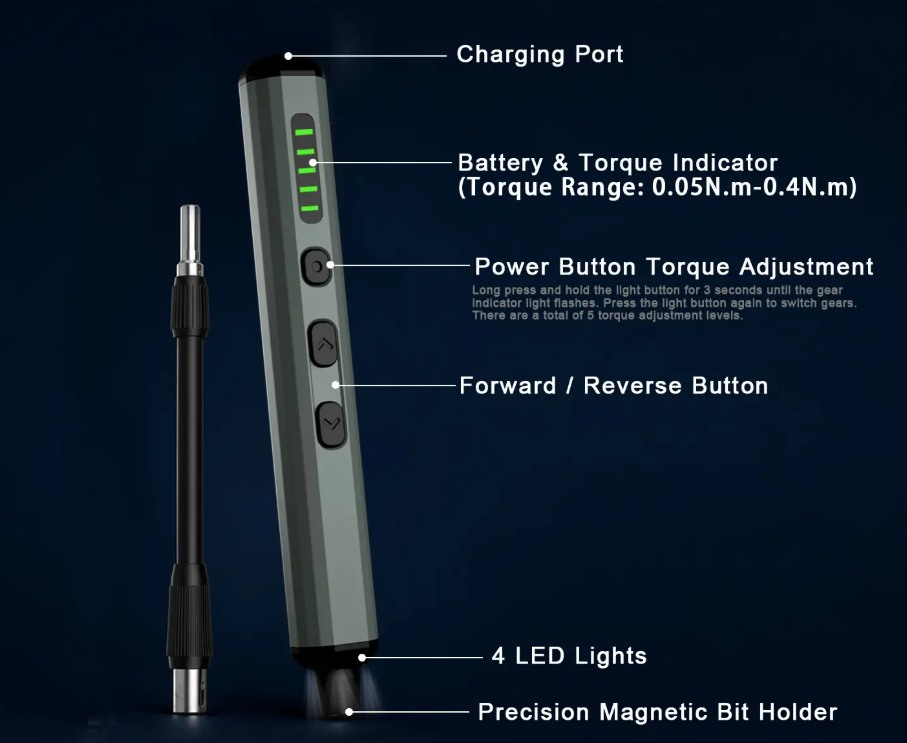
The 66-in-1 and 68-in-1 models share several battery and charging parameters, including 350mAh capacity and 0.35A charging current.
The 153-in-1 uses a different battery configuration, with a larger rated capacity and higher specified charging current.
These differences matter when preparing product specification sheets, evaluating charging performance, or confirming related technical documents.
A specification approved for one model should not automatically be applied to another.
For example, changing the battery or charging circuit in an OEM project may affect the validity of previously approved technical documentation.
Explore FIXBUD's electric precision screwdriver sets for available product configurations.
One common source of confusion in electric screwdriver sourcing is the difference between a charging port, a charging cable, and a power adapter.
They serve different functions and should be listed separately in the product specification.
The charging port is the connector built into the screwdriver.
A USB-C connector identifies the physical interface. It does not, by itself, confirm support for every USB charging protocol or power source.
The required charging input should be verified against the manufacturer's specifications.
The cable connects the screwdriver to a compatible power source.
All three FIXBUD models discussed in this article use USB-C charging ports and include USB charging cables in their standard packages.
The cable specification and supplied quantity should be confirmed in the final packaging list.
A power adapter is a separate device that converts an external power supply into the electrical output required by the product.
FIXBUD's standard 66-in-1, 68-in-1, and 153-in-1 packages do not include an external power adapter.
This distinction is important for brands preparing retail listings, packaging artwork, and product instructions.
A listing stating "USB-C charging" should not imply that a wall charger is supplied.
For import projects, the inclusion of a separate adapter may introduce additional electrical safety, labeling, and documentation requirements.
Importers should confirm the compatible charging source rather than assume that any USB-C power adapter is suitable.
Packaging Advice:
Specify the charging port, supplied cable, and power adapter inclusion as three separate items in the approved product configuration.
Import documentation is not simply a checklist of certification logos.
The important question is whether the supplied evidence corresponds to the actual product, battery, and accessories being imported.
For rechargeable precision tools, several document categories may be relevant.
Document or Record |
What to Verify |
|---|---|
Battery Specification Sheet |
Battery type, model, capacity, voltage, and manufacturer |
UN38.3 Test Summary |
Applicable lithium battery transport testing and model identification |
Battery SDS/MSDS |
Relevant battery safety and handling information |
Air/Sea Transport Documents |
Documents required for the actual shipment |
Product Test Reports |
Product model, tested configuration, standards, and report details |
Declaration of Conformity |
Applicable legislation, product identification, and responsible manufacturer |
Labels and Instructions |
Electrical ratings, identification, warnings, and market-specific information |
Lithium batteries are subject to specific transport requirements.
UN38.3 documentation addresses defined battery transport safety tests.
A battery SDS or MSDS provides different information and is not a replacement for the UN38.3 Test Summary.
Air and sea shipment arrangements may also require different documentation or handling procedures.
Before shipment, confirm the battery model, whether it is installed in the equipment, the shipment configuration, and the applicable carrier requirements.
For UK and EU imports, the applicable requirements depend on the product's design, electrical characteristics, intended market, and accompanying accessories.
Documents may relate to electrical safety, electromagnetic compatibility, restricted substances, or other applicable requirements.
CE, RoHS, FCC, UL, and similar terms do not all represent the same type of assessment or document.
For example, a product test report, a Declaration of Conformity, and a battery transport test summary have different purposes.
For FIXBUD's 66-in-1 and 68-in-1 models, the available factory document list includes RoHS, MSDS, UN38.3, UL, FCC, PSE, CE, battery MSDS, and air/sea transport identification materials.
The 153-in-1 factory list includes UL, CE, FCC, RoHS, battery MSDS, and air/sea transport identification materials.
These are reported document categories. The actual report numbers, applicable standards, coverage, and validity must be checked before making compliance claims. An item not listed should be treated as unconfirmed rather than automatically unavailable.
Before approving production, confirm that the documents identify the relevant product and battery versions.
A report covering one battery model may not automatically cover a replacement cell, modified charging circuit, or different power adapter.
For private-label projects, the final product identification, labels, and declarations should also be reviewed.
Documentation Takeaway:
Request documents by product model and configuration, not only by certification name. Final market compliance should be assessed against the applicable requirements.
An electrical specification sheet helps define the product, but sample testing is necessary to confirm how the finished screwdriver performs.
Testing should reflect the final configuration that will be supplied in bulk.
Verify charging with a power source that meets the manufacturer's specified requirements.
Check that the USB-C connection is secure, charging starts correctly, and the device indicates its charging status as designed.
Unexpected charging interruption, connector instability, or abnormal heat should be investigated before approval.
The screwdriver should be checked under representative operating conditions.
For example, FIXBUD's 66-in-1 and 68-in-1 configurations provide five electric torque settings from 0.05 to 0.40 N·m, while the 153-in-1 provides three settings from 0.16 to 0.45 N·m.
These settings illustrate different product configurations, but torque selection should be evaluated separately from battery capacity.
A larger battery does not guarantee higher torque or better fastening accuracy.
Compare sample performance with the approved specification.
Where relevant, assess charging time, battery condition, low-battery indication, and repeatability across samples.
The acceptance criteria should be defined before testing rather than established after production begins.
If the OEM project changes the battery, charging circuit, or other electrical components, the affected performance and documentation requirements should be reviewed again.
A useful RFQ should provide enough technical and commercial information for the manufacturer to evaluate the proposed configuration.
Rather than requesting only a quotation for a "USB-C electric screwdriver," specify the actual operating and supply requirements.
RFQ Item |
Information to Confirm |
|---|---|
Product Configuration |
Reference model, accessories, intended applications |
Battery |
Chemistry, model, rated capacity, voltage |
Charging System |
USB-C interface, input voltage/current, charging time |
Charging Accessories |
Cable inclusion, adapter inclusion or exclusion |
Operating Requirements |
Required torque settings and operating performance |
Sample Approval |
Charging, functionality, appearance, and packaging checks |
Documentation |
Battery, product, and transport documents for the relevant market |
Packaging and Labels |
Retail contents, branding, ratings, manuals |
Commercial Requirements |
Order quantity, target market, delivery schedule |
For a private-label project, product modifications should be identified before the quotation is finalized.
For example, changing the retail packaging or logo is a different type of project from changing the battery or charging electronics.
The latter may require further engineering evaluation, testing, and documentation review.
For existing configurations, FIXBUD can discuss OEM branding, packaging, product selection, and project requirements. Battery or electrical design changes require separate technical feasibility confirmation.
Electric Precision Screwdriver Manufacturer
1. Does a larger battery capacity always mean longer operating time?
No. Operating time depends on battery capacity, motor efficiency, torque settings, working load, and the electronic system. Compare performance under defined test conditions rather than relying only on mAh.
2. Do FIXBUD electric precision screwdrivers include wall chargers?
The standard 66-in-1, 68-in-1, and 153-in-1 packages include USB charging cables but do not include external power adapters.
3. Can the same battery test report be used for different screwdriver models?
Only when the report's coverage and the actual battery configuration support that use. Confirm the battery model and relevant technical details before relying on an existing report.
4. Is a CE marking enough to confirm EU import compliance?
No. The applicable legislation, conformity documentation, product identification, and supporting technical evidence must also be checked.
5. Can battery capacity or charging specifications be customized for OEM orders?
Such changes can be discussed during product development, but feasibility, testing requirements, documentation, cost, and production arrangements must be evaluated for the proposed configuration.
Selecting an OEM electric precision screwdriver involves more than comparing battery capacities or charging connectors. Accurate electrical specifications, clearly defined packaging contents, sample approval, and model-specific documentation help reduce misunderstandings between product development and bulk supply.
FIXBUD supplies electric precision screwdriver sets for tool brands, importers, distributors, and private-label projects. Share your target market, preferred model, battery and charging requirements, packaging details, and estimated quantity to discuss suitable configurations and available documentation.
Discuss Your Electric Screwdriver Project → Hot News
2026-11-19
2026-11-18
2026-11-18
2026-11-17
2026-11-17
2026-11-16

FIXBUD manufactures precision screwdriver sets, bits and repair tools in China. OEM/ODM, private-label and bulk supply worldwide. Request a custom quote today.
Room 402, Building B, Getailong Zhigu, Bulong Road, Bantian Street, Longgang District, Shenzhen, Guangdong Province, China
Copyright © 2026 EWIN ENTERPRISE LTD. All rights reserved. Privacy Policy
 EN