Electronics accessories brands can expand their product lines with repair tools by adding precision screwdriver sets, device opening tools, and application-specific repair kits that complement their existing products. Start with a small selection of relevant SKUs, validate customer demand, and use OEM/ODM customization to develop a consistent branded range.
The October 2026 Hong Kong sourcing shows brought together consumer electronics and gaming product suppliers from October 11–14, with categories including PC peripherals and gaming accessories.
These overlapping sourcing categories provide a useful reason for electronics accessory brands to review adjacent product opportunities.
From a product development perspective, repair tools are worth evaluating for three reasons:
-- Related Applications: Computer, gaming, and electronic accessories often involve installation, adjustment, maintenance, or component replacement.
-- Product Line Expansion: Repair tools can create additional SKUs without moving into an entirely unrelated market.
-- Private-Label Opportunities: Tool configurations, storage cases, colors, and packaging can be adapted to an existing brand.
The key is identifying products that complement current sales rather than adding generic tool kits with no clear connection to the brand.
Not every electronics accessories brand needs a complete repair tool range. A focused selection is usually a better starting point.
| Existing Product Market | Repair Tool Opportunities | Product Positioning |
| Computer & Laptop Accessories | Precision screwdriver sets, opening tools | Laptop maintenance and component upgrades |
| Gaming Accessories | Precision screwdriver kits, pry tools, tweezers | Game console and controller maintenance |
| Smartphone & Tablet Accessories | Precision bits, opening tools, repair kits | Device maintenance and screen-opening applications |
| General Electronics Accessories | Compact manual screwdriver sets, pen-style screwdrivers | Installation and maintenance accessories |
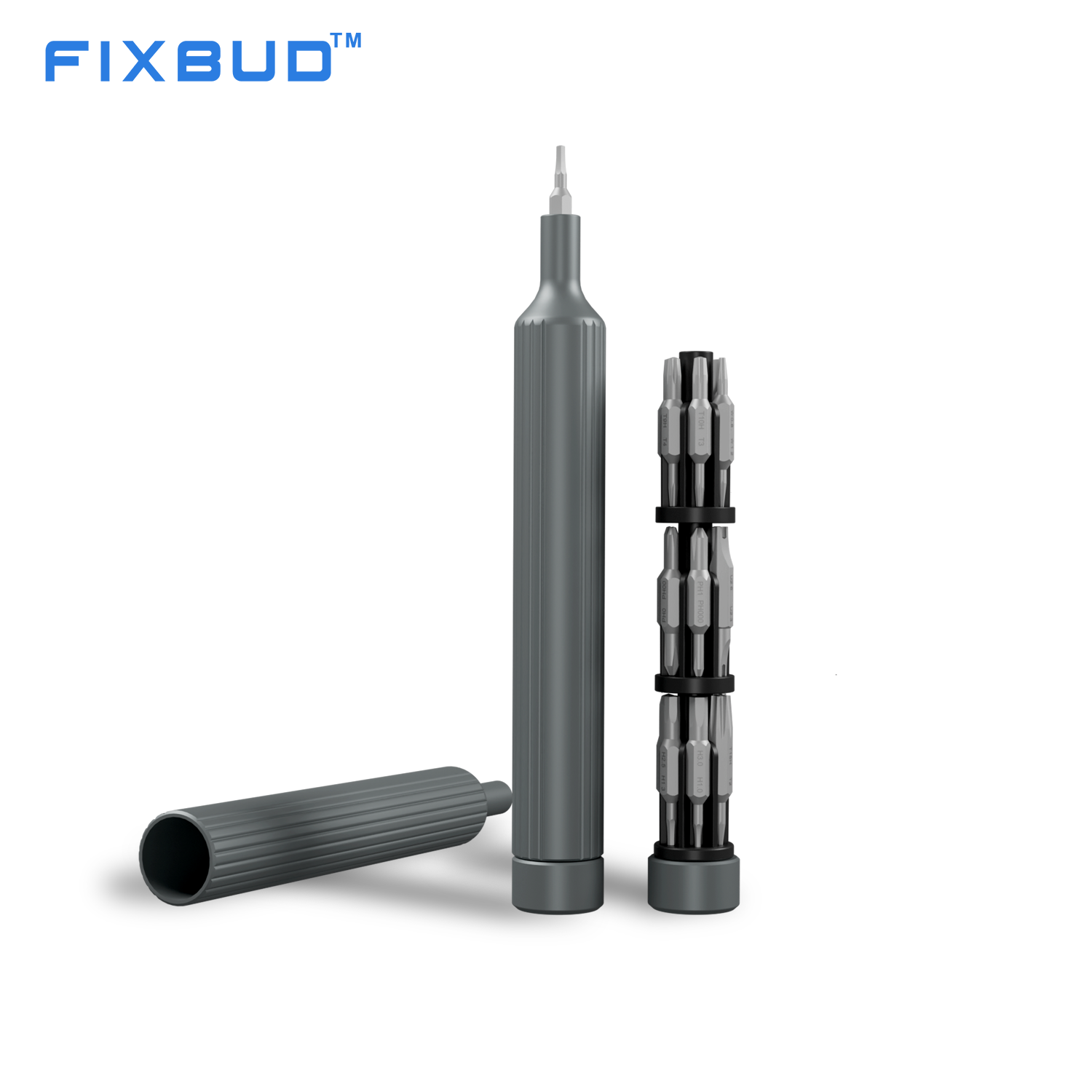
Manual precision screwdriver sets are a practical entry category because they offer multiple bit configurations and do not involve rechargeable battery systems.
For computer accessory brands, a kit with suitable Phillips and Torx bits may support common laptop maintenance tasks, subject to device compatibility.
Gaming accessory brands may require different bit types and opening tools depending on the supported devices.
Buyers should prioritize actual screw compatibility over advertised piece count.
Electric precision screwdriver sets can complement a manual range where powered fastening is relevant.
However, they introduce additional requirements involving battery performance, charging safety, quality testing, and after-sales support.
For a brand entering the repair tool category, an electric model is better evaluated as a separate product tier rather than an automatic upgrade to every manual kit.
A common mistake in product expansion is introducing several similar screwdriver sets without clear differences.
Instead, develop a small range with distinct functions.
| Product Level | Suggested Configuration | Business Purpose |
| Entry SKU | Compact manual precision screwdriver set | Test demand and introduce the category |
| Core SKU | Precision screwdriver set with selected opening accessories | Serve common electronics maintenance tasks |
| Specialized SKU | Laptop or gaming device repair tool kit | Target a defined application |
| Premium SKU | Electric precision screwdriver set | Expand into a higher-feature segment |
Each SKU should answer a different customer need.
For example, a laptop accessories brand could begin with a manual tool kit for SSD and RAM upgrades. A broader repair kit could follow if sales data supports demand for additional accessories.
This expanded approach makes product differentiation clearer and reduces unnecessary overlap between inventory items.
Standard repair kits can simplify initial product testing. Private-label development becomes more valuable when you identify specific requirements that existing configurations do not meet.
Customization should focus on practical differences:
-- Bit Selection: Choose bit types and sizes for the intended equipment.
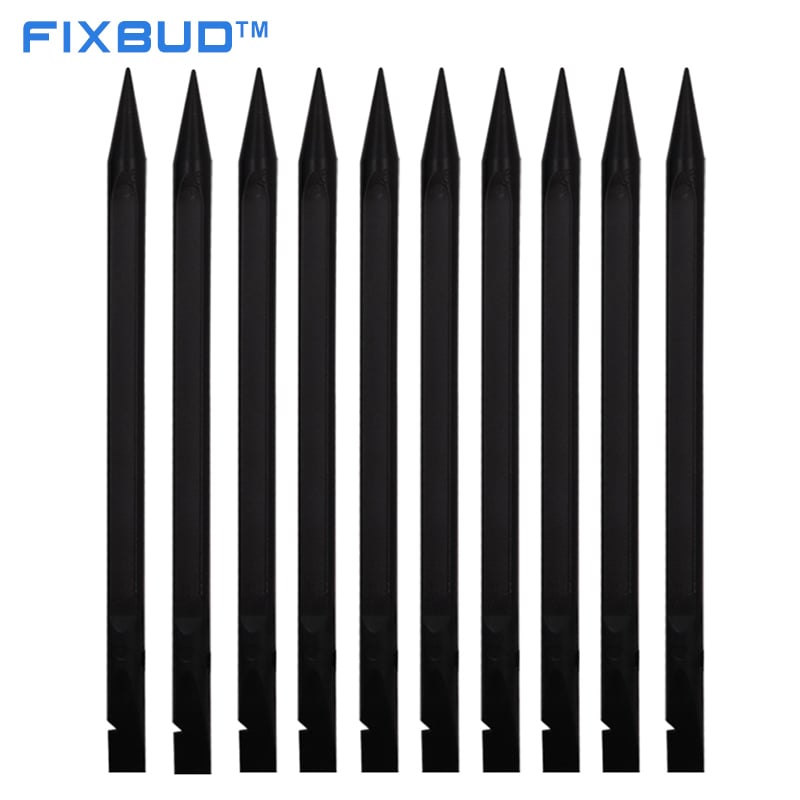
-- Repair Accessories: Add suitable opening picks, spudgers, tweezers, or magnetic mats.
-- Product Appearance: Select compatible colors, logos, and case designs.
-- Retail Packaging: Develop packaging for e-commerce, shelf display, or product bundling.
A European repair tool brand worked with FIXBUD to develop a specialized game console repair kit.
Instead of sourcing a generic screwdriver assortment, the customer requested selected Torx and Phillips bits, opening picks, spudgers, tweezers, a brush, and a magnetic mat. FIXBUD also developed an EVA storage layout to organize the tools.
This project illustrates how application-specific configurations can support a branded repair tool range. The value came from selecting and organizing relevant components rather than increasing the number of accessories.
Electronics accessories brands should adapt their repair tool sourcing strategy to the channels they already serve.
Prioritize differentiated configurations, consistent quality, and products that fit the existing brand positioning. Consider how entry-level, core, and premium SKUs work together.
Start with a limited selection and evaluate sales performance before expanding. Check product dimensions, landed costs, applicable compliance documents, return risks, and fulfillment requirements.
Consider packaging visibility, hanging displays, barcode labeling, shelf dimensions, and replenishment schedules. A clear product range may be more useful than several nearly identical kits.
Compact, lower-cost manual screwdriver sets can support accessory bundles, launch campaigns, and branded gifts. Electric screwdriver sets are generally less suitable for cost-sensitive promotional programs.
Focus on tool durability, bit accuracy, and standardized configurations that support repeated maintenance work.
Before adding repair tools to an existing product line, confirm the following:
-- Product Compatibility: Are the included bits and accessories suitable for the advertised applications?
-- Sample Quality: Have bit fit, handle performance, tool durability, and packaging been tested?
-- Customization Scope: Which components can be changed without new tooling?
-- MOQ and Lead Time: Can the supplier support initial testing and future replenishment?
-- Compliance: Which product and material documents apply to the destination market?
For electrical products, battery and transportation documentation may require additional review.
Buyers should also confirm that approved samples, production specifications, and final packaging match before bulk shipment.
For electronics accessories brands, working with a manufacturer offering multiple repair tool categories can simplify the development of a coordinated product range.
FIXBUD manufactures manual and electric precision screwdriver sets, screwdriver bits, prying and opening tools, and repair accessories.
Our OEM/ODM services support product configuration, branding, and packaging development for different markets. Our factory holds ISO9001 and BSCI credentials, with quality control covering materials, bit accuracy, product function, and production consistency.
Adding repair tools to an electronics accessories brand should begin with applications your existing customers already recognize.
Planning new laptop, gaming, or electronics maintenance SKUs? Explore FIXBUD precision screwdriver sets and opening tools, or share your target devices, product requirements, and expected order volume to discuss suitable OEM/ODM configurations.
Discuss Your Repair Tool Product Line → https://www.fixbudtools.com/contact-us
Sources & References:
October 2026 Hong Kong Sourcing Shows — Official Opening Announcement
 Hot News
2026-10-20
2026-10-19
2026-10-19
2026-10-19
2026-10-16
2026-10-16

FIXBUD is a trusted screwdriver and tool set manufacturer in China with ISO9001, CE, UL certifications. Offering OEM/ODM services, high-quality tools, and complete procurement solutions for global partners. Request a custom quote today.
Room 402, Building B, Getailong Zhigu, Bulong Road, Bantian Street, Longgang District, Shenzhen, Guangdong Province, China
Copyright © 2026 EWIN ENTERPRISE LTD. All rights reserved. Privacy Policy
 EN