 EN
EN

Choosing the right electric precision screwdriver supplier is one of the most consequential decisions a procurement manager or product engineer can make. Whether you are sourcing tools for electronics assembly, medical device manufacturing, or consumer product repair, the supplier you select directly shapes the quality, consistency, and long-term cost of your operations. A poor choice can mean delayed shipments, inconsistent torque performance, and tools that fail under production pressure — all of which translate into real business losses.
The market for precision electric tools has expanded significantly, and with that growth comes a wider range of suppliers — each making bold claims about quality, reliability, and value. Knowing which features actually distinguish a capable electric precision screwdriver supplier from a mediocre one requires a structured evaluation framework. This article breaks down the top features you should assess before committing to any supplier relationship, helping you make a confident, well-informed sourcing decision.
Product Quality and Engineering Standards
Torque Accuracy and Consistency
The most fundamental measure of any electric precision screwdriver supplier is the torque accuracy of their products. In precision applications — such as assembling circuit boards, optical instruments, or miniature mechanical components — even a small deviation in torque can cause stripped screws, damaged housings, or failed assemblies. A reliable supplier should be able to demonstrate that their tools maintain consistent torque output across production batches, not just in isolated test samples.
Ask potential suppliers for torque calibration data and batch testing reports. A credible electric precision screwdriver supplier will have documented quality control processes that verify torque performance at multiple stages of production. If a supplier cannot provide this data, that is a significant red flag regardless of how competitive their pricing appears.
Consistency across units matters as much as peak performance. When you are equipping an entire production line or a field service team, every tool in the set needs to perform to the same standard. Suppliers who invest in rigorous torque testing at scale are the ones worth building long-term relationships with.
Material Quality and Component Durability
Beyond torque, the physical construction of the tools tells you a great deal about a supplier's engineering philosophy. High-quality electric precision screwdrivers use hardened steel bits, robust motor housings, and ergonomic grip materials that hold up under repeated daily use. Inferior materials may look acceptable in product photos but degrade quickly under real working conditions.
When evaluating an electric precision screwdriver supplier, request physical samples before placing bulk orders. Examine the bit hardness, the smoothness of the speed control mechanism, the battery life under load, and the overall build tolerance. These physical details reveal whether the supplier is cutting corners on materials to hit a lower price point.
Durability is especially important in industrial and commercial contexts where tools are used for hours each day. A supplier whose products hold up over thousands of cycles without performance degradation is delivering genuine value, even if their unit price is slightly higher than alternatives.
Product Range and Customization Capability
Breadth of Bit Selection and Kit Configurations
A strong electric precision screwdriver supplier does not offer a single product — they offer a thoughtfully designed range that covers different torque ranges, bit types, and application scenarios. For buyers sourcing tools for diverse teams or multiple product lines, the ability to source everything from one supplier simplifies procurement, reduces vendor management overhead, and often unlocks better pricing through consolidated orders.
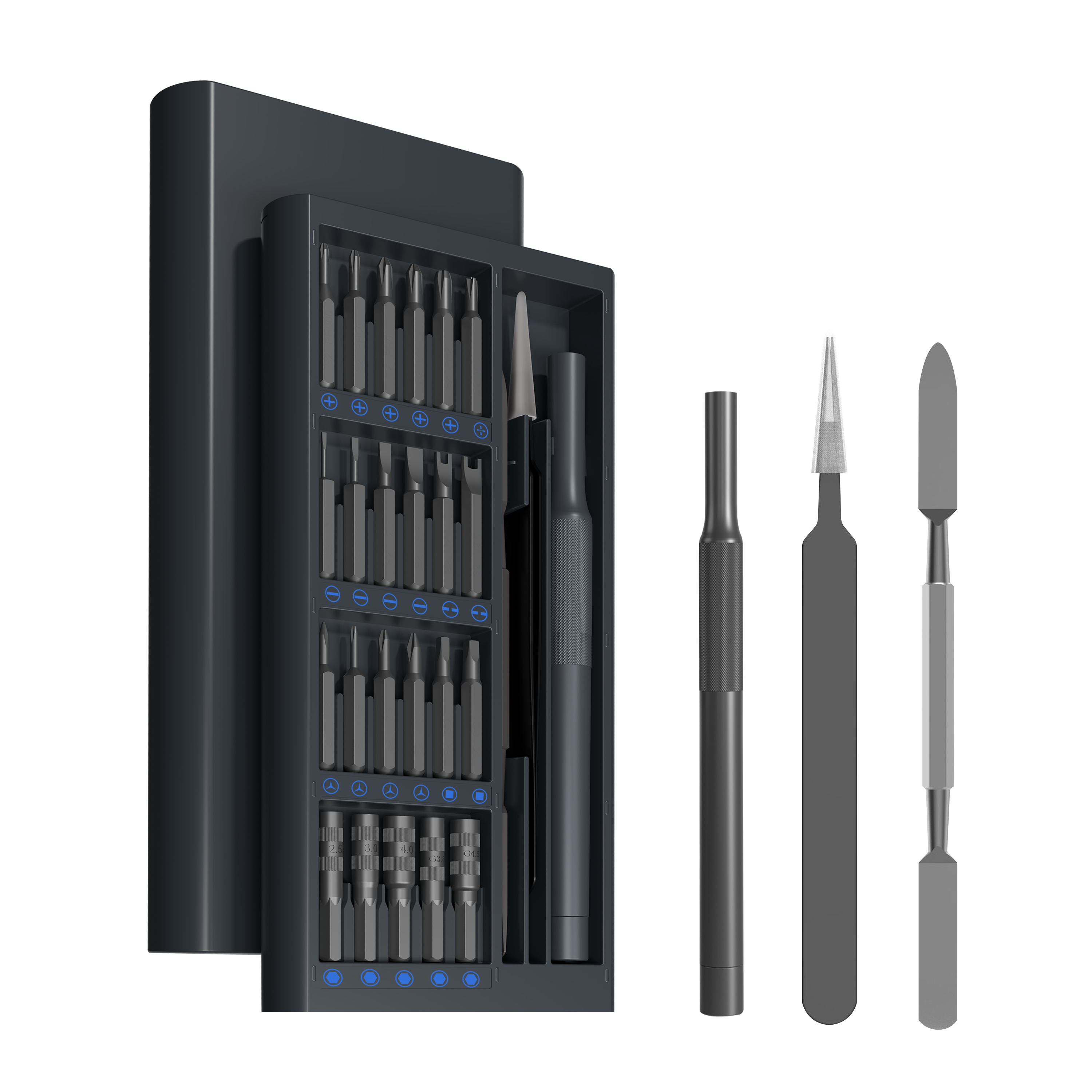
Look for suppliers who offer comprehensive kit configurations, such as sets that include a wide variety of bit types — Phillips, Torx, hex, slotted, tri-wing, and specialty formats — alongside the driver unit itself. A well-configured kit from a capable electric precision screwdriver supplier reduces the need to source supplementary bits from secondary vendors, which adds complexity and potential compatibility issues.
The availability of different torque settings and speed modes within a product line is also a meaningful indicator of supplier sophistication. Suppliers who engineer their products with adjustable performance parameters understand that their customers operate across varied applications, and they design accordingly.
OEM and Private Label Options
For businesses that sell tools under their own brand or integrate precision screwdrivers into branded service kits, OEM and private label capability is a critical supplier feature. An electric precision screwdriver supplier with OEM experience understands how to adapt packaging, labeling, and product specifications to meet a buyer's brand requirements without compromising the underlying tool quality.
When assessing this capability, ask about minimum order quantities for custom configurations, lead times for branded packaging, and the supplier's experience working with international brand standards. A supplier who has successfully delivered OEM programs for other clients will have established workflows that reduce the risk of errors and delays in your own program.
Customization capability also extends to technical specifications. Some buyers need tools with specific torque limits, particular battery types, or unique ergonomic features for their workforce. An electric precision screwdriver supplier who can accommodate these requirements at reasonable volumes is a genuinely strategic partner, not just a commodity vendor.
Certifications, Compliance, and Safety Standards
Relevant Industry Certifications
Certifications are not just paperwork — they are evidence that an electric precision screwdriver supplier has subjected their products to independent third-party verification. For tools sold into regulated industries or exported to international markets, certifications such as CE, RoHS, FCC, and UL are often mandatory. Suppliers who hold these certifications have invested in compliance infrastructure and are more likely to maintain consistent product standards over time.
Always verify certifications directly rather than accepting a supplier's word. Request copies of current certificates and check that they cover the specific product models you intend to purchase. Certifications that are expired, limited to a different product variant, or issued by unrecognized bodies offer little real assurance.
For buyers in the electronics or medical device sectors, additional standards may apply. An experienced electric precision screwdriver supplier serving these industries will be familiar with the relevant compliance requirements and will proactively communicate how their products meet them.
ESD Safety and Specialized Application Compliance
In electronics manufacturing and repair environments, electrostatic discharge (ESD) protection is a non-negotiable requirement. Tools that are not ESD-safe can damage sensitive components during assembly or repair, leading to costly failures that may not be immediately visible. A knowledgeable electric precision screwdriver supplier will offer ESD-safe tool options and be able to explain the specific design features that provide that protection.
Beyond ESD, some applications require tools that meet cleanroom standards, food-grade material requirements, or specific IP ratings for use in humid or dusty environments. Suppliers who understand these specialized compliance needs and have products designed to meet them are demonstrating a depth of application knowledge that goes well beyond basic tool manufacturing.
When an electric precision screwdriver supplier proactively raises compliance considerations relevant to your industry, that is a strong signal that they understand your operational context and are thinking about your success, not just the transaction.
Supply Chain Reliability and Fulfillment Performance
Lead Times, Stock Availability, and Order Flexibility
Even the highest-quality tools from an electric precision screwdriver supplier are worthless if they cannot be delivered when your production schedule demands them. Supply chain reliability is one of the most practically important features to evaluate, yet it is often underweighted during the initial supplier selection process. Ask for historical on-time delivery data, current lead times for standard and custom orders, and the supplier's approach to managing inventory buffers for high-demand products.
Suppliers who maintain adequate finished goods inventory for their core product lines can fulfill urgent orders without the delays associated with made-to-order production. For buyers who operate lean inventory models or face unpredictable demand spikes, this stock availability is a genuine competitive advantage that the right electric precision screwdriver supplier can provide.
Order flexibility is equally important. A supplier who requires large minimum order quantities for every transaction may not be the right fit for businesses that need to scale orders up or down based on project volume. Look for suppliers who can accommodate both small trial orders and large production runs within a single commercial relationship.
Logistics Capability and International Shipping Experience
For buyers sourcing from overseas suppliers, logistics capability is a critical dimension of supplier evaluation. An electric precision screwdriver supplier with established international shipping experience will have relationships with reliable freight partners, familiarity with customs documentation requirements, and processes for handling import compliance in your target market.
Ask about packaging standards for international shipment, experience with your specific destination country, and the supplier's approach to handling damaged or lost shipments. Suppliers who have shipped to your market before will have fewer surprises and faster resolution processes when issues arise.
The ability to provide real-time shipment tracking, proactive communication about delays, and clear documentation for customs clearance are all signs of a mature logistics operation. These capabilities reduce the administrative burden on your procurement team and minimize the risk of costly supply disruptions.
After-Sales Support and Long-Term Partnership Value
Warranty Terms and Technical Support
The relationship with an electric precision screwdriver supplier does not end at the point of purchase. After-sales support — including warranty coverage, replacement part availability, and technical assistance — is a meaningful indicator of how a supplier values long-term customer relationships. Suppliers who offer clear, enforceable warranty terms and responsive technical support are demonstrating confidence in their products and commitment to customer success.
Evaluate warranty terms carefully. Look at the coverage period, what defects are included, and the process for making a warranty claim. A supplier whose warranty process is slow, bureaucratic, or full of exclusions is effectively offering less protection than their headline warranty period suggests. The best electric precision screwdriver supplier relationships are built on straightforward, fair warranty terms that both parties understand clearly.
Technical support capability matters particularly for buyers who are integrating precision electric tools into automated or semi-automated assembly processes. In these contexts, questions about torque programming, tool integration, and performance optimization require knowledgeable support staff who understand both the product and the application.
Communication Quality and Account Management
Responsive, clear communication is one of the most underrated features of a great electric precision screwdriver supplier. In practice, the quality of communication during the sales process is a reliable predictor of how the supplier will behave when problems arise. Suppliers who respond promptly, answer questions with specificity, and proactively share relevant information are demonstrating an operational culture that supports strong buyer-supplier relationships.
For buyers placing significant or recurring orders, dedicated account management is a valuable feature. An account manager who understands your business, anticipates your needs, and advocates internally on your behalf can resolve issues faster and identify opportunities for cost savings or product improvements that a transactional supplier relationship would never surface.
The best electric precision screwdriver supplier relationships evolve over time into genuine partnerships where both parties invest in each other's success. That kind of relationship starts with communication quality and grows through consistent delivery on commitments.
FAQ
What certifications should I require from an electric precision screwdriver supplier?
At minimum, look for CE and RoHS certifications for tools sold into European markets, and FCC or UL certifications for North American markets. If your application involves electronics assembly, ask specifically about ESD-safe certification. Always request current certificate copies and verify that they cover the exact product models you are purchasing, not just a related product line.
How do I evaluate torque consistency when comparing electric precision screwdriver suppliers?
Request batch testing reports that show torque output data across multiple units from the same production run. Consistent torque performance should be demonstrated statistically, not just through a single sample. If a supplier cannot provide this data, ask whether they can arrange a third-party torque verification test on a sample order before you commit to a larger purchase.
Is it worth paying more for an electric precision screwdriver supplier with OEM capability?
If you sell tools under your own brand or include them in branded service kits, OEM capability is not optional — it is a core requirement. Even if you do not currently need OEM services, working with a supplier who has that capability signals a higher level of manufacturing sophistication and quality control infrastructure, which benefits all buyers regardless of whether they use the OEM option.
How important is after-sales support when selecting an electric precision screwdriver supplier?
After-sales support becomes critically important the moment something goes wrong — and in any long-term supplier relationship, something eventually will. Suppliers with strong warranty terms, responsive technical support, and clear replacement part availability protect your operations from costly downtime. Evaluate support quality during the sales process by asking detailed questions and observing how thoroughly and quickly the supplier responds.
Table of Contents
- Product Quality and Engineering Standards
- Product Range and Customization Capability
- Certifications, Compliance, and Safety Standards
- Supply Chain Reliability and Fulfillment Performance
- After-Sales Support and Long-Term Partnership Value
-
FAQ
- What certifications should I require from an electric precision screwdriver supplier?
- How do I evaluate torque consistency when comparing electric precision screwdriver suppliers?
- Is it worth paying more for an electric precision screwdriver supplier with OEM capability?
- How important is after-sales support when selecting an electric precision screwdriver supplier?