 EN


The repair and maintenance industry is undergoing a quiet but significant transformation. As devices grow smaller, more complex, and more densely packed with sensitive components, the tools used to service them must evolve in parallel. At the center of this shift is the rise of smart, high-performance electric precision screwdrivers — and the electric precision screwdriver supplier ecosystem that supports professionals who demand accuracy, speed, and reliability in every job.
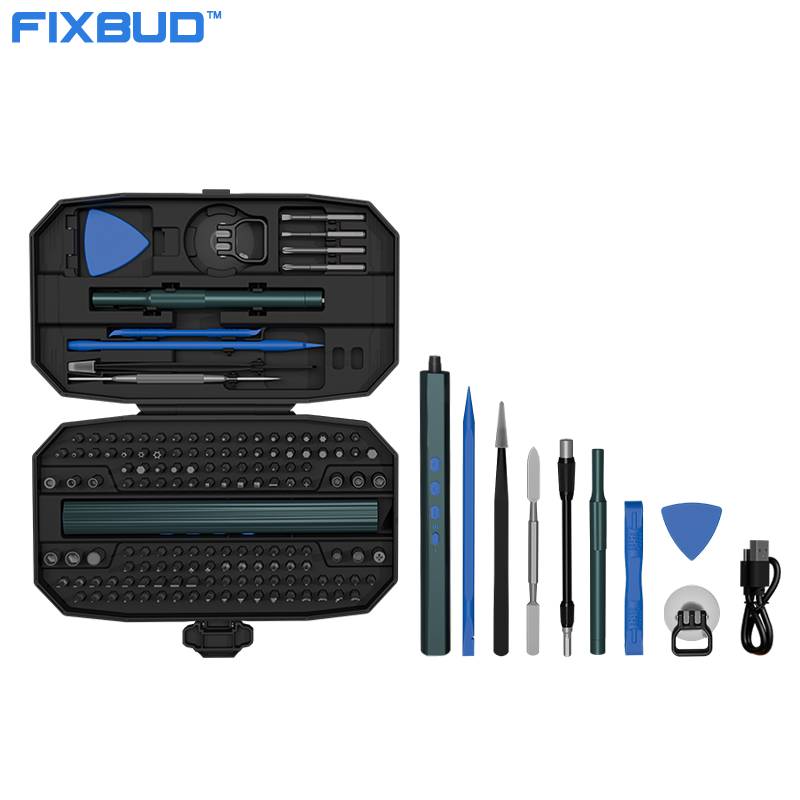
This guide explains smart screwdriver features, supplier capabilities, and key criteria for choosing tools that improve repair efficiency and consistency.
How Smart Technology Is Redefining Precision Fastening
The Shift from Manual to Motorized Precision
Manual screwdrivers depend on technician experience, making torque inconsistent and increasing the risk of stripped screws or damaged components.
Motorized tools provide consistent, programmable torque, reducing operator variability, rework, and damage during high-volume repair tasks.
Brushless motors, digital torque control, and ergonomic designs improve repeatability while reducing fatigue during extended use.
Embedded Intelligence and Torque Management
Smart screwdrivers use sensors and microcontrollers to detect resistance and stop rotation at preset torque thresholds.
Multiple torque presets help technicians handle different screw sizes and materials without repeated manual recalibration.
LEDs, digital displays, and saved settings further improve visibility, speed, and repeatability during routine repairs.
The Role of the Electric Precision Screwdriver Supplier in Modern Repair Operations
Beyond the Tool: What a Supplier Actually Provides
A capable supplier provides compatible bits, chargers, cases, replacement parts, and technical documentation alongside the screwdriver.
Look for kits covering Phillips, flathead, Torx, Pentalobe, tri-wing, and other common electronics fasteners; broader bit selection reduces downtime.
Labeled cases simplify bit identification, inventory checks, and safe transport between workshops and job sites.
Supply Chain Reliability and Product Consistency
Reliable restocking and consistent product quality help prevent tool shortages, repair delays, customer dissatisfaction, and lost revenue.
Suppliers should document batch consistency for torque calibration, motor performance, and bit hardness through specifications and testing records.
Compare lead times, minimum order quantities, repeat-order flexibility, and responsive after-sales support before committing to a supplier.
Key Features That Define Next-Generation Electric Precision Screwdrivers
Torque Range and Adjustability
Choose a documented torque range suited to the task: consumer electronics often need lower torque than industrial equipment.
Fine torque adjustments help protect plastic housings, delicate connectors, and fasteners with limited or unpublished specifications.
Detailed specifications, application guidance, and calibration support are valuable for professional buyers and regulated repair environments.
Battery Life, Charging Speed, and Ergonomics
Battery capacity and charging speed affect productivity; choose a tool that supports typical daily workloads with minimal downtime.
USB-C charging simplifies power management by allowing technicians to use shared chargers, hubs, or power banks.
Low weight, balanced design, comfortable grips, and accessible controls reduce fatigue and improve handling during long sessions.
Application Scenarios Where Smart Electric Precision Screwdrivers Excel
Consumer Electronics and Mobile Device Repair
Smartphones, tablets, laptops, and wearables use tiny screws that demand low torque and accurately fitting bits.
A well-organized bit library helps technicians service varied brands and models, improving repair speed and customer satisfaction.
Smart torque control is particularly valuable in this context because many consumer electronics manufacturers specify very tight torque tolerances for critical fasteners. Over-tightening a screw that secures a battery connector or a display assembly can cause immediate or latent damage that is difficult to diagnose and expensive to correct. Electric precision screwdrivers with automatic torque cutoff eliminate this risk systematically.
Industrial Maintenance and Field Service Applications
Beyond consumer electronics, electric precision screwdrivers are increasingly used in industrial maintenance, instrumentation calibration, and field service operations. In these environments, the tool must perform reliably under more demanding conditions — variable temperatures, dusty or humid environments, and the physical demands of field use rather than controlled workshop conditions.
An electric precision screwdriver supplier targeting industrial buyers will typically offer tools with higher ingress protection ratings, more robust construction, and extended warranty coverage. The bit sets provided for industrial applications may also differ, with greater emphasis on security fasteners, hex drives, and specialty profiles used in industrial equipment.
Field service technicians also place a premium on portability and self-contained kit organization. A compact, all-in-one kit that includes the screwdriver, a full bit set, and a charging cable in a single carry case reduces the risk of leaving essential components behind and simplifies tool management across multiple job sites. The electric precision screwdriver supplier that understands these field realities will design its products and packaging accordingly.
Evaluating and Selecting the Right Electric Precision Screwdriver Supplier
Technical Specifications as a Selection Framework
When comparing options from one electric precision screwdriver supplier to another, technical specifications provide the most objective basis for evaluation. Key parameters to assess include maximum torque output, torque adjustment range, motor type (brushless motors offer longer service life and more consistent performance), battery capacity in milliamp-hours, charging time, rotation speed in RPM, and the number and types of bits included.
It is important to match these specifications to the actual demands of your repair environment rather than defaulting to the highest-spec option available. A tool with a torque range far exceeding your application requirements may be unnecessarily expensive and potentially less precise at the low end of its range. A knowledgeable electric precision screwdriver supplier will help you identify the right specification tier for your specific use case.
Bit quality deserves particular attention during supplier evaluation. Bits made from S2 steel or chrome vanadium alloy offer significantly better durability and fit precision than lower-grade alternatives. Poor-quality bits strip faster, fit less accurately, and can damage fastener heads — negating the precision benefits of the electric screwdriver itself. An electric precision screwdriver supplier that uses premium bit materials throughout its kits is investing in the long-term performance of its products.
Long-Term Partnership Value and After-Sales Support
The relationship with an electric precision screwdriver supplier should be evaluated as a long-term partnership rather than a transactional purchase. Tools wear out, bits need replacement, and repair businesses evolve — requiring different configurations or higher volumes over time. A supplier with strong after-sales support, clear warranty terms, and accessible replacement parts provides continuity that protects your operational investment.
Technical support responsiveness is a meaningful differentiator. When a tool malfunctions or a technician has a question about optimal settings for a specific application, the ability to reach knowledgeable support staff quickly can make a real difference to workflow continuity. An electric precision screwdriver supplier that invests in customer support infrastructure is demonstrating confidence in its products and commitment to its customers' success.
Pricing transparency and volume discount structures are also worth examining. A supplier that offers clear, consistent pricing with defined volume tiers makes budget planning straightforward and builds trust over time. Hidden fees, inconsistent pricing, or opaque discount structures are warning signs that the supplier relationship may become difficult to manage as your purchasing volume grows.
FAQ
What should I look for in an electric precision screwdriver supplier for a professional repair shop?
Prioritize adjustable torque, durable bits, battery life, technical specifications, reliable restocking, responsive support, and warranty coverage for daily professional use.
How does smart torque control in electric precision screwdrivers improve repair outcomes?
Preset torque cutoff prevents over-tightening and component damage. Adjustable tools help reduce rework and improve first-time repair quality. Verify warranty terms before placing large orders.
Are electric precision screwdrivers suitable for industrial maintenance applications?
Yes, provided the tool is specified correctly for the application. Industrial maintenance may require higher torque ranges, more robust construction, and specific bit profiles compared to consumer electronics repair. When evaluating an electric precision screwdriver supplier for industrial use, prioritize tools with durable housings, appropriate torque specifications, and bit sets that cover the fastener types common in your equipment. Field service use cases also benefit from compact, self-contained kit designs.
How many bits should a comprehensive electric precision screwdriver kit include?
A truly comprehensive kit from a quality electric precision screwdriver supplier should include at minimum 50 to 100 bit types to cover the full range of fasteners encountered in modern electronics and general repair work. Kits in the 150-bit range provide even broader coverage, accommodating rare or proprietary fastener profiles found in older devices, specialty equipment, and international product variants. The key is not just quantity but bit quality — premium steel alloys ensure accurate fit and long service life.
Table of Contents
- How Smart Technology Is Redefining Precision Fastening
- The Role of the Electric Precision Screwdriver Supplier in Modern Repair Operations
- Key Features That Define Next-Generation Electric Precision Screwdrivers
- Application Scenarios Where Smart Electric Precision Screwdrivers Excel
- Evaluating and Selecting the Right Electric Precision Screwdriver Supplier
-
FAQ
- What should I look for in an electric precision screwdriver supplier for a professional repair shop?
- How does smart torque control in electric precision screwdrivers improve repair outcomes?
- Are electric precision screwdrivers suitable for industrial maintenance applications?
- How many bits should a comprehensive electric precision screwdriver kit include?