 EN

In most workshops, manufacturing lines, and professional service environments, a standard set of screwdrivers gets the job done. But there are moments — sometimes recurring, sometimes critical — when off-the-shelf tools simply fall short. Whether the challenge is a confined access point, a sensitive electronic assembly, or a high-volume production task requiring ergonomic efficiency, the limitations of generic tools become impossible to ignore. This is precisely when professionals and procurement managers start looking beyond the standard toolbox, searching for customized screwdriver solutions that are engineered to match the exact demands of the task at hand.
Customized screwdriver solutions are worth considering when standard tools cause recurring errors, slow work, or increase operating costs. The right design addresses specific task requirements and improves precision, comfort, and efficiency.
The Limits of Standard Screwdrivers in Demanding Environments
When Generic Tools Create Operational Bottlenecks
Standard screwdrivers suit general tasks but may not meet precise torque or access requirements. Poor fit can cause overtightening, stripped fasteners, rework, and avoidable production costs.
Electronics work requires accurate tip geometry, shaft length, and handle design. Without these features, standard tools can slip, apply excessive torque, or damage circuit boards and delicate components.
Operational bottlenecks caused by mismatched tools are often underestimated. Technicians who constantly adapt their grip or technique to compensate for an ill-fitting tool experience fatigue more quickly, make more errors, and complete tasks more slowly. Over time, these micro-inefficiencies compound into measurable productivity losses that directly impact the bottom line.
Identifying the Pain Points That Signal a Need for Customization
Repeated stripped screws, cam-out, and poor access indicate that standard tools may be inadequate. Customized screwdriver solutions can address these problems through application-specific tips, dimensions, or shaft designs, reducing the need for technicians to improvise during assembly and maintenance.
Frequent discomfort or repetitive strain may also justify customization. Tool weight, length, and grip affect handling; a balanced handle, rotating cap, or suitable shaft can improve comfort and control during repeated tasks.
Proprietary fasteners and restricted access may require custom tip profiles, extended or angled shafts, or adjusted magnetic strength. These features help tools reach and engage fasteners that standard screwdrivers cannot handle.
Core Scenarios That Justify Customized Screwdriver Solutions
Precision Electronics and Micro-Assembly Work
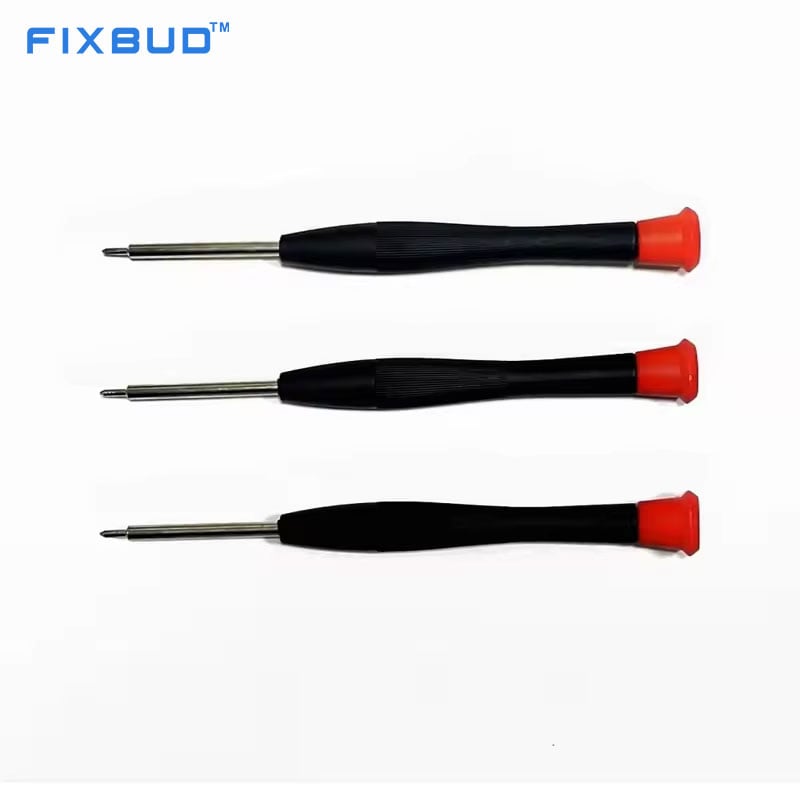
Precision electronics often require compact tools with accurate tips and controlled handling. A mini screwdriver with a rotating cap allows fingertip operation, making it useful for smartphones, hearing aids, and other small assemblies.
Tip dimensions and materials should match the fastener. Even a small size mismatch can cause slipping or damage, so customized screwdriver solutions help ensure consistent contact during micro-assembly.
Magnetic tip customization is another critical factor in this space. Too much magnetic strength can interfere with sensitive electronic components, while too little means screws are dropped and lost inside assemblies. The ability to calibrate magnetic strength as part of a customized solution removes this variable from the equation entirely, resulting in fewer errors and faster cycle times.
High-Volume Production Lines and Industrial Assembly
On high-volume production lines, small time savings accumulate quickly. Ergonomic handles, balanced weight, and tips designed for fast engagement can improve throughput and reduce operator fatigue.
Torque control is equally important in industrial assembly contexts. Many products have specific torque requirements defined by engineering specifications. A customized screwdriver solution can be configured with mechanical torque limiting or tactile feedback features that help operators consistently hit the correct torque without needing separate measurement tools. This reduces variability, improves quality control, and streamlines the inspection process.
Industrial environments also often involve extreme conditions — heat, vibration, chemical exposure — that degrade standard tools rapidly. Customized screwdriver solutions can incorporate materials and coatings selected specifically for the operating environment, extending tool life and reducing the frequency and cost of replacement.
Specialized Maintenance and Service Applications
Field technicians may encounter recessed, angled, or unusual fasteners in HVAC, medical, aerospace, and telecommunications equipment. Standard tools may not reach these locations, delaying repairs and increasing service time.
Customization in this context often means extended shaft lengths, angled or offset configurations, or interchangeable tip systems that allow one handle to serve multiple fastener profiles. For organizations managing fleets of service technicians, equipping each technician with a purpose-built kit of customized screwdriver solutions rather than a generic assortment reduces diagnostic time, eliminates improvisation, and supports consistent service quality across the entire team.
What Customization Options Are Actually Available
Handle Ergonomics and Rotating Cap Mechanisms
Handle customization can improve grip, pressure distribution, and comfort during repeated use. Options include soft-grip materials, precision polymers, and dimensions suited to the task and user.
A rotating cap lets the palm maintain downward pressure while the fingers turn the screwdriver. This improves control and reduces effort when handling small or delicate fasteners.
Custom handle branding is also an option many industrial buyers overlook. For organizations that issue tools to technicians, branded handles with company identification make inventory management easier and reinforce professional standards within the workforce. This is a low-cost customization that adds practical value without altering tool performance.
Tip Geometry, Shaft Length, and Magnetic Calibration
Custom tip geometry provides a close fit for uncommon or proprietary fasteners. The correct profile reduces cam-out, protects screw heads, and supports accurate torque transfer.
Shaft length and diameter customization addresses spatial access constraints directly. When a fastener is located in a deep recess or surrounded by other components, a standard-length shaft may not reach — or may contact adjacent parts in a way that causes damage. Customized screwdriver solutions allow shaft dimensions to be specified precisely for the application, eliminating the need for extension adapters that add bulk and reduce control.
Magnetic tip strength is a nuanced customization that matters greatly in electronics and precision assembly. The right magnetic calibration holds the screw securely on the tip for placement and driving, while releasing it cleanly once seated. Calibrated magnetism, as part of a broader customized screwdriver solution package, reduces dropped fasteners, speeds up the assembly process, and prevents contamination of sensitive components by stray magnetic fields.
How to Approach the Customization Decision
Defining the Specification Before Engaging a Supplier
Define requirements before contacting a supplier. Specify tip type, shaft dimensions, handle design, magnetic strength, torque range, and material constraints to obtain a suitable solution.
Involve the end users — the technicians, assemblers, or service engineers who will actually use the tools — in the specification process. Their first-hand experience of the task constraints and tool limitations is the most reliable source of requirement data. Cross-referencing their input with engineering drawings or assembly process documentation ensures that the final specification is both operationally grounded and technically accurate.
It is also important to consider volume requirements early in the process. Minimum order quantities, lead times, and unit cost structures for customized screwdriver solutions differ significantly from standard product procurement. Understanding these commercial parameters upfront allows you to build a realistic business case and select a supplier model that matches your operational scale.
Evaluating the Total Cost of Customization Versus Workarounds
Compare rework, access delays, operator strain, and downtime with purpose-built tool costs.
A useful framework is to calculate the cost per unit or per task of the current approach — including rework rates, cycle time, and maintenance cost — and compare it against the projected performance with customized screwdriver solutions. Even modest improvements in error rate and cycle time, multiplied across high-volume operations, typically yield a return on investment within a few production cycles.
Beyond the financial calculus, there is also a quality and reputation dimension to consider. In industries where product quality is closely monitored and customer returns are costly, the ability to deliver consistent, precise assembly with purpose-built tools is a competitive differentiator. Customized screwdriver solutions are not just a cost management strategy — they are an investment in quality assurance.
FAQ
What industries benefit most from customized screwdriver solutions?
Industries that benefit most include electronics manufacturing and repair, medical device assembly, aerospace and defense, automotive production, and field service operations. Any environment where standard tools create access limitations, ergonomic strain, or precision errors is a candidate for customized screwdriver solutions. The greater the volume, the complexity, or the precision requirement, the stronger the case for customization.
How long does it take to develop a customized screwdriver solution?
Development time depends on complexity. Branding or minor tip changes may take weeks, while proprietary profiles, custom shafts, and specialized magnetic features can require several months.
Is there a minimum order quantity for customized screwdriver solutions?
Minimum order quantities vary by supplier and customization level. Confirm tooling costs, order volumes, lead times, and flexibility early, especially for specialized or low-volume requirements.
Can customized screwdriver solutions be updated or re-specified over time?
Customized screwdriver solutions can be revised as products and processes change. Regular feedback with the supplier helps update tool specifications when fasteners, access needs, or performance requirements evolve.