 EN
EN

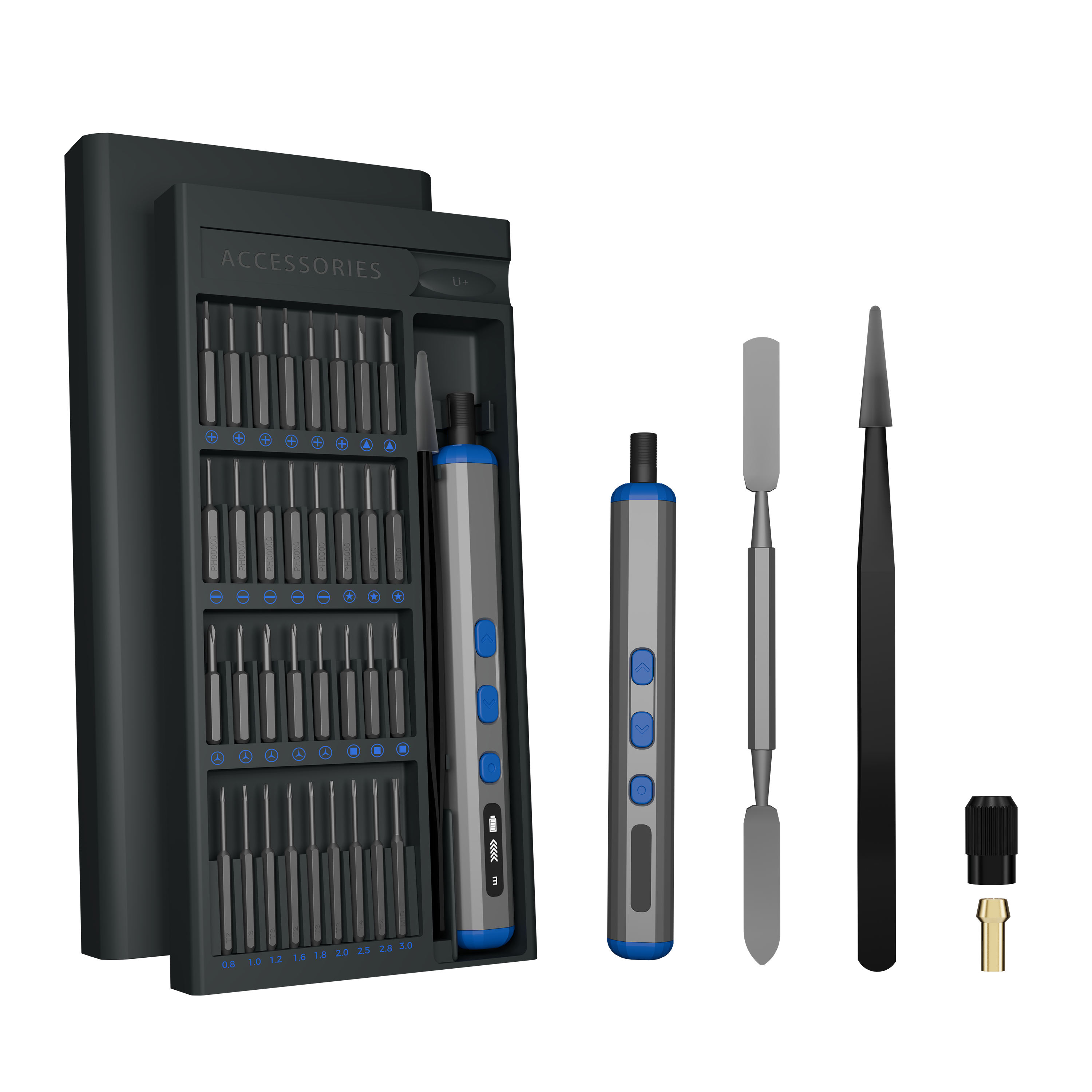
When sourcing assembly tools for precision-driven industries, the relationship between torque control and speed is not a minor technical footnote — it is the foundation of product quality, worker safety, and operational efficiency. Choosing the right electric precision screwdriver supplier means evaluating far more than price per unit. It means asking whether that supplier truly understands the engineering demands behind every fastening application you run, and whether their product lineup reflects that understanding in measurable, verifiable ways.
This article is written for procurement managers, engineering leads, and operations teams who are actively evaluating what a qualified electric precision screwdriver supplier should bring to the table. The focus is on two core performance dimensions — torque control and speed — and the specific capabilities, documentation, and support structures that separate a capable supplier from one that simply ships tools. Understanding these distinctions before you commit to a supplier relationship can prevent costly rework, warranty disputes, and production downtime.
Why Torque Control Is the Core Competency of Any Serious Supplier
The Engineering Significance of Accurate Torque Delivery
Torque is the rotational force applied to a fastener during assembly. Too little torque leaves joints loose and vulnerable to vibration-induced failure. Too much torque strips threads, cracks housings, or damages sensitive components — particularly in electronics, medical devices, and optical assemblies. A qualified electric precision screwdriver supplier must demonstrate that their tools deliver torque within a defined, repeatable tolerance range, not just a nominal specification printed on a datasheet.
The difference between a supplier who understands torque engineering and one who does not becomes visible in how they specify their products. Vague claims like 'adjustable torque' without stated accuracy ranges, calibration traceability, or test methodology are red flags. A serious electric precision screwdriver supplier will provide torque accuracy data — typically expressed as a percentage of full-scale deviation — along with information about how that accuracy was verified and under what conditions it holds.
For industries operating under ISO 9001, IEC standards, or medical device regulations, torque traceability is not optional. Your supplier should be able to explain how their tools are calibrated, what calibration intervals are recommended, and whether calibration certificates are available. This level of documentation is a baseline expectation from any electric precision screwdriver supplier serving regulated manufacturing environments.
Torque Setting Mechanisms and Their Practical Implications
Not all torque adjustment systems are equal. Some electric precision screwdriver tools use simple dial-based mechanical clutches, while others offer digital torque programming with memory presets. The right mechanism depends on your application complexity. If your assembly line involves multiple fastener sizes and joint types, a supplier offering digitally programmable torque settings with lockable presets provides a significant operational advantage over one offering only manual adjustment.
An electric precision screwdriver supplier that offers multi-stage torque profiles — where the tool can apply a seating torque followed by a final torque in a single cycle — demonstrates a deeper understanding of joint mechanics. This capability is particularly valuable in soft-joint applications where gradual torque buildup prevents component damage. Ask your supplier whether their tools support this feature and whether it can be configured without specialized software or proprietary hardware.
Repeatability is equally important as accuracy. A tool that hits the correct torque value on the first fastener but drifts over a production shift creates quality inconsistencies that are difficult to trace. Your electric precision screwdriver supplier should provide data on torque repeatability — ideally expressed as a standard deviation or Cpk value — so you can assess whether the tool meets your process capability requirements before committing to a purchase.
Speed Control: What It Means Beyond RPM Ratings
Understanding Variable Speed and Its Role in Assembly Quality
Speed in a precision screwdriving context is not simply about how fast a tool can spin. It is about how intelligently the tool manages rotational velocity across different phases of the fastening cycle. A well-designed electric precision screwdriver supplier will offer tools with variable speed control that allows operators or automated systems to run at higher speeds during the free-run phase — when the fastener is threading in without load — and then automatically reduce speed as the joint begins to seat.
This speed transition behavior directly affects joint quality. High-speed seating in soft materials or delicate assemblies can cause cross-threading, cam-out, or surface damage. An electric precision screwdriver supplier that only advertises maximum RPM without addressing speed transition logic is providing incomplete information. The relevant question is not 'how fast does it go' but 'how does it behave as the fastener approaches final torque.'
For high-volume production environments, speed also affects cycle time and throughput. A supplier who can demonstrate that their tools maintain consistent speed under varying load conditions — without significant RPM drop as torque resistance increases — is offering a tool that will perform predictably across an entire production shift. This consistency is what separates a professional-grade electric precision screwdriver supplier from a commodity tool vendor.
Speed Range Suitability Across Application Types
Different assembly applications require fundamentally different speed profiles. Micro-electronics assembly, for example, typically demands very low speeds — sometimes below 100 RPM — to prevent component stress and allow precise operator control. Automotive sub-assembly work may require higher speeds to meet cycle time targets while still maintaining torque accuracy. A capable electric precision screwdriver supplier should offer a product range that covers these different speed requirements rather than a one-size-fits-all catalog.
When evaluating a supplier, ask whether their speed specifications are measured under load or at no-load conditions. No-load RPM figures are commonly cited but rarely reflect real-world performance. An electric precision screwdriver supplier that provides under-load speed data is giving you information you can actually use to predict tool behavior in your specific application. This transparency is a strong indicator of technical credibility.
Speed control also intersects with ergonomics. Tools that allow operators to modulate speed through trigger sensitivity or programmable speed limits reduce fatigue and improve accuracy in manual assembly tasks. If your operations involve human operators rather than automated fixtures, your electric precision screwdriver supplier should be able to advise on ergonomic speed settings and demonstrate how their tools support operator-controlled speed variation without sacrificing torque consistency.
What a Qualified Supplier Must Offer Beyond the Tool Itself
Technical Documentation and Application Support
A reliable electric precision screwdriver supplier does not simply ship a product and leave you to figure out the rest. They provide comprehensive technical documentation that includes torque-angle curves, recommended operating parameters for common joint types, maintenance schedules, and troubleshooting guides. This documentation should be available in formats that your engineering team can actually use — not just marketing brochures with glossy images and vague performance claims.
Application engineering support is another differentiator. When you are setting up a new assembly process or troubleshooting a torque-related quality issue, having access to a supplier's technical team can save significant time and cost. An electric precision screwdriver supplier that offers pre-sales application consultation — helping you select the right torque range, speed profile, and bit configuration for your specific joint — is providing value that extends well beyond the transaction itself.
Calibration support is a third dimension of supplier capability that is often overlooked during initial procurement. Ask whether the supplier offers calibration services, whether they can provide NIST-traceable calibration certificates, and what their recommended recalibration interval is for different usage intensities. An electric precision screwdriver supplier that has a clear, documented calibration program is one that takes quality seriously at an institutional level.
Product Range Depth and Customization Capability
A supplier with a narrow product range forces you to compromise. If their tools only cover a limited torque band or a single speed configuration, you may find yourself using a tool that is technically capable but not optimally matched to your application. A well-positioned electric precision screwdriver supplier will offer a range that spans micro-torque applications — where accuracy in the range of 0.01 Nm matters — through to medium-duty assembly tasks requiring several Newton-meters of consistent output.
Customization capability is increasingly important for specialized industries. Some assembly environments require non-standard bit interfaces, extended reach configurations, or tools designed for cleanroom or ESD-sensitive environments. An electric precision screwdriver supplier that can accommodate these requirements — either through standard catalog options or engineered-to-order configurations — is a more strategic partner than one limited to off-the-shelf offerings.
Bit and accessory compatibility is also worth evaluating. A supplier whose tools are compatible with industry-standard bit systems gives you flexibility in sourcing consumables and reduces dependency on proprietary accessories. This compatibility consideration is a practical indicator of how the electric precision screwdriver supplier thinks about total cost of ownership for their customers, not just initial sale value.
Evaluating Supplier Reliability and Long-Term Partnership Value
Quality Assurance Processes and Traceability
Before committing to an electric precision screwdriver supplier, it is worth understanding their internal quality assurance processes. Do they perform end-of-line torque verification on every unit? Do they maintain production traceability records that allow individual tools to be traced back to specific manufacturing batches? These questions matter because they determine how quickly and accurately quality issues can be investigated if they arise in your production environment.
Suppliers who operate under ISO 9001 or equivalent quality management systems have a structured framework for process control, corrective action, and continuous improvement. This does not guarantee perfect products, but it does mean that when problems occur, there is a systematic process for identifying root causes and preventing recurrence. An electric precision screwdriver supplier with certified quality management is a lower-risk partner for regulated or high-stakes manufacturing environments.
Warranty terms and failure rate data are additional indicators of supplier confidence in their own products. A supplier willing to provide mean time between failure data, or to offer extended warranty terms for high-volume customers, is signaling that they stand behind their quality claims. Conversely, a supplier who deflects these questions or offers only vague assurances is one whose quality confidence may not match their marketing messaging.
Responsiveness, Lead Times, and Supply Chain Stability
Even the best electric precision screwdriver supplier creates operational risk if they cannot deliver reliably. Lead time consistency, minimum order flexibility, and the ability to respond quickly to urgent replacement needs are all dimensions of supplier reliability that affect your production continuity. During your evaluation process, ask about standard lead times, safety stock availability, and how the supplier handles demand spikes or supply disruptions.
After-sales responsiveness is equally important. When a tool fails mid-shift or a torque setting drifts unexpectedly, you need a supplier who can respond quickly with technical guidance or a replacement unit. An electric precision screwdriver supplier with a dedicated after-sales support team — reachable by phone or email with defined response time commitments — is a more dependable partner than one who routes all support through a generic ticketing system with multi-day response windows.
Long-term product availability is a consideration that is often underweighted during initial procurement. If a supplier discontinues a tool model after two years, you face the cost and disruption of requalifying a replacement. An electric precision screwdriver supplier with a track record of maintaining product lines and providing advance notice of discontinuations is one that respects the investment their customers make in qualifying and deploying their tools.
FAQ
What torque accuracy should I expect from a professional electric precision screwdriver supplier?
A professional electric precision screwdriver supplier should offer tools with torque accuracy within plus or minus 5% of the set value under normal operating conditions, with some high-precision models achieving plus or minus 3% or better. Always ask for accuracy data measured under load, not just at no-load conditions, and request calibration certificates if your application is regulated or quality-critical.
How do I know if a supplier's speed specifications are reliable for my application?
Request under-load speed data rather than relying solely on no-load RPM figures. A credible electric precision screwdriver supplier will be able to provide speed-torque curves showing how RPM changes as resistance increases. This data allows you to predict real-world tool behavior in your specific joint type and material, which is far more useful than a single maximum speed figure.
Can one electric precision screwdriver supplier cover both micro-electronics and general assembly needs?
It depends on the depth of their product range. Some suppliers specialize in micro-torque applications while others focus on medium-duty assembly. A supplier with a broad catalog covering torque ranges from below 0.1 Nm to several Newton-meters, with appropriate speed profiles for each range, can serve both application types. Always verify that the specific model you select is optimized for your torque and speed requirements rather than assuming a single tool covers all scenarios.
What documentation should an electric precision screwdriver supplier provide for regulated industries?
For regulated industries such as medical device manufacturing or aerospace sub-assembly, your electric precision screwdriver supplier should provide NIST-traceable calibration certificates, torque accuracy test reports, material safety data where relevant, and documentation supporting your process validation requirements. Some suppliers also offer tool qualification support packages that include application-specific test data to accelerate your internal validation process.
Table of Contents
- Why Torque Control Is the Core Competency of Any Serious Supplier
- Speed Control: What It Means Beyond RPM Ratings
- What a Qualified Supplier Must Offer Beyond the Tool Itself
- Evaluating Supplier Reliability and Long-Term Partnership Value
-
FAQ
- What torque accuracy should I expect from a professional electric precision screwdriver supplier?
- How do I know if a supplier's speed specifications are reliable for my application?
- Can one electric precision screwdriver supplier cover both micro-electronics and general assembly needs?
- What documentation should an electric precision screwdriver supplier provide for regulated industries?