 EN
EN

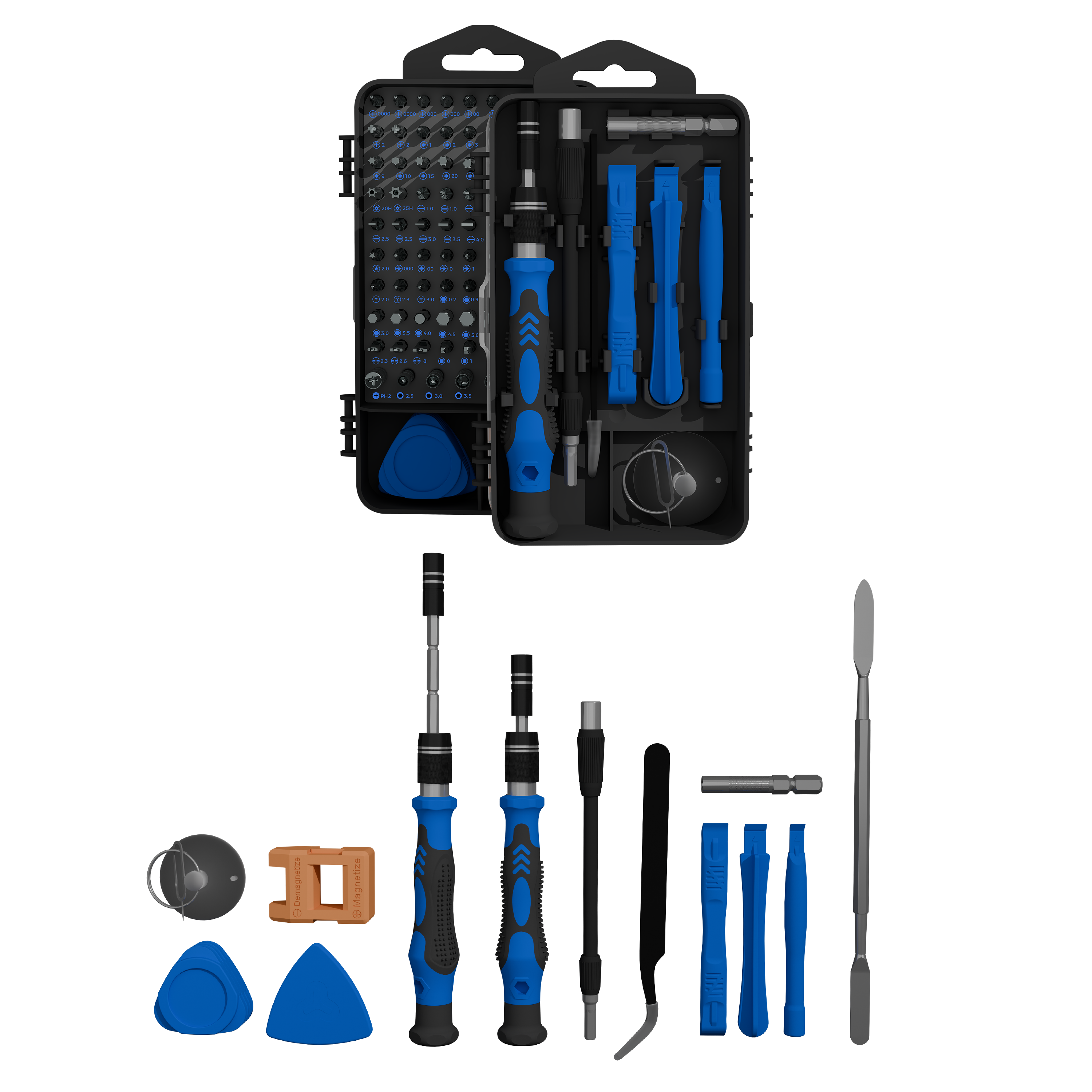
When selecting tools for electronics repair, industrial maintenance, or precision assembly work, the quality delivered by a repair screwdrivers manufacturer directly impacts operational efficiency and tool lifespan. A repair screwdrivers manufacturer specializes in producing instruments designed to meet exacting tolerances, withstand repetitive stress, and deliver consistent torque transfer across thousands of fastening cycles. Understanding what defines a capable repair screwdrivers manufacturer helps procurement teams, maintenance departments, and tool distributors make informed decisions about supplier partnerships and product specifications.
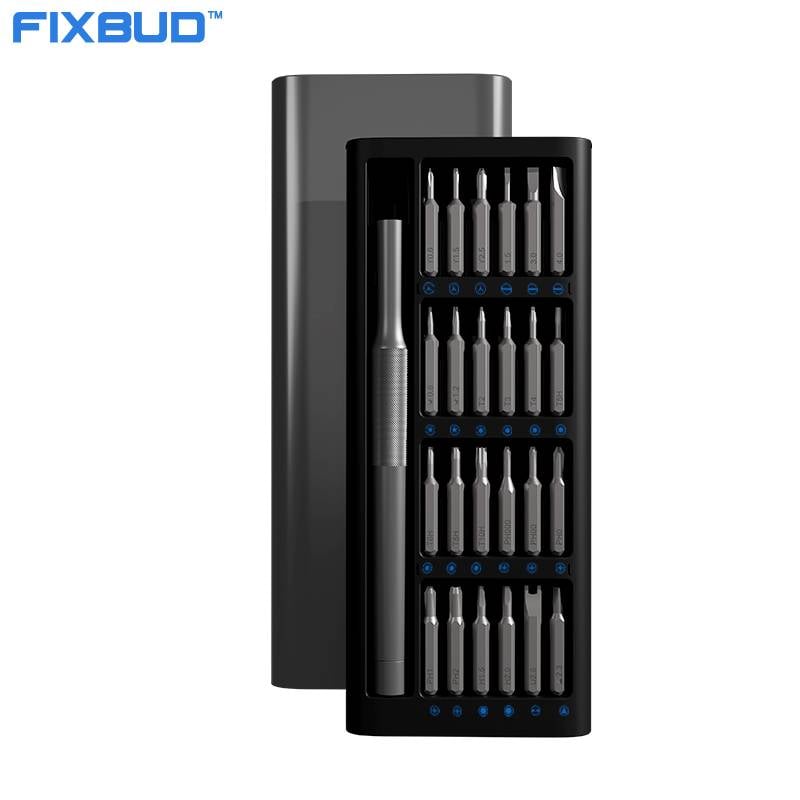
A repair screwdrivers manufacturer operates at the intersection of metallurgy, ergonomic design, and manufacturing precision. Unlike general-purpose tool makers, a specialized repair screwdrivers manufacturer invests in controlled heat treatment processes, tip geometry validation, and material traceability systems that ensure every driver shaft maintains hardness ratings between HRC 52 and HRC 60 while preventing brittleness. This article examines the core competencies that distinguish a professional repair screwdrivers manufacturer, the material and process standards they follow, and the quality benchmarks buyers should evaluate when sourcing precision fastening tools.
Material Selection and Metallurgical Standards in Repair Screwdriver Manufacturing
Steel Grades and Heat Treatment Protocols
A repair screwdrivers manufacturer begins product development by selecting steel alloys that balance hardness, toughness, and corrosion resistance. Chrome vanadium steel remains the industry standard for shaft production due to its ability to retain edge integrity under torsional load. A repair screwdrivers manufacturer employing proper heat treatment protocols subjects blanks to austenitizing temperatures between 820 and 860 degrees Celsius, followed by oil quenching and tempering cycles that stabilize the microstructure. This controlled process ensures a repair screwdrivers manufacturer can deliver shafts with uniform hardness distribution and minimal residual stress.
Surface treatments applied by a repair screwdrivers manufacturer further enhance tool longevity. Chrome plating, black oxide coating, or sandblasted finishes prevent oxidation in humid environments while maintaining dimensional accuracy. A repair screwdrivers manufacturer serving industrial markets often applies titanium nitride coatings to tips, increasing surface hardness to HV 2400 and reducing friction during fastener engagement. These metallurgical choices directly impact how long a repair screwdrivers manufacturer's products maintain tip geometry under repeated use in field service applications.
Handle Material Engineering for Durability
Beyond shaft metallurgy, a repair screwdrivers manufacturer must engineer handles that resist chemical exposure, temperature fluctuations, and mechanical impact. Injection-molded polypropylene and thermoplastic elastomer overmolds provide the grip resilience required in repair environments. A repair screwdrivers manufacturer testing handle materials subjects samples to ASTM D256 impact tests and ASTM D2240 Shore hardness measurements to validate performance across temperature ranges from minus 20 to plus 80 degrees Celsius. This ensures a repair screwdrivers manufacturer's tools remain functional whether used in refrigerated spaces or heat-generating equipment enclosures.
A repair screwdrivers manufacturer focused on ergonomic performance conducts grip diameter studies to optimize torque transfer efficiency. Handles with 30 to 35 millimeter diameters allow technicians to apply maximum rotational force without hand fatigue. A repair screwdrivers manufacturer incorporating anti-roll features and color-coded size identification further enhances usability in multi-tool service kits. These design considerations distinguish a professional repair screwdrivers manufacturer from commodity tool suppliers who prioritize cost reduction over functional performance.
Manufacturing Process Control and Quality Assurance Systems
Precision Machining and Tip Geometry Validation
A repair screwdrivers manufacturer achieves dimensional accuracy through CNC turning operations that maintain shaft diameter tolerances within plus or minus 0.02 millimeters. Tip forming represents the most critical stage in production, where a repair screwdrivers manufacturer must replicate Phillips, Pozidriv, Torx, or hex geometries to match international standards including ISO 2380 and DIN 5265. A repair screwdrivers manufacturer operating under ISO 9001 certification employs coordinate measuring machines to verify tip angles, wall thicknesses, and corner radii on statistical sample batches from each production run.
Automated inspection systems used by a repair screwdrivers manufacturer detect surface defects, hardness variations, and dimensional deviations before packaging. A repair screwdrivers manufacturer committed to zero-defect delivery integrates vision systems that scan tips at 50 micron resolution, rejecting any unit showing burrs, cracks, or incomplete form fill. This level of process control ensures a repair screwdrivers manufacturer consistently delivers tools that seat fully in fastener recesses without camming out or damaging screw heads during torque application.
Batch Traceability and Performance Testing
A repair screwdrivers manufacturer serving regulated industries implements lot tracking systems that link every finished tool to raw material certificates, heat treatment logs, and inspection records. This traceability allows a repair screwdrivers manufacturer to conduct root cause analysis if field failures occur and to issue targeted recalls rather than broad product withdrawals. A repair screwdrivers manufacturer producing tools for aerospace or medical device repair maintains these records for minimum seven-year retention periods to satisfy audit requirements.
Destructive testing protocols employed by a repair screwdrivers manufacturer include torsional yield tests where shafts are twisted to failure while measuring maximum torque capacity. A repair screwdrivers manufacturer targeting professional repair markets designs tools to withstand 150 percent of rated working torque without permanent deformation. Accelerated life testing, where a repair screwdrivers manufacturer subjects tools to 10,000 fastening cycles under controlled conditions, validates that tip geometry remains within specification throughout expected service life. These validation methods ensure a repair screwdrivers manufacturer delivers products that perform reliably in demanding field environments.
Design Features That Define a Professional Repair Screwdrivers Manufacturer
Ergonomic Handle Architecture and Grip Optimization
A repair screwdrivers manufacturer differentiates products through handle designs that reduce repetitive strain injuries among technicians performing high-volume repair tasks. Tri-lobe handle profiles developed by a repair screwdrivers manufacturer distribute pressure across palm and finger contact zones, minimizing localized stress during sustained torque application. A repair screwdrivers manufacturer incorporating slip-resistant texturing on grip surfaces enhances control in oil-contaminated or wet working conditions common in automotive and industrial maintenance.
Cap swivel features offered by a repair screwdrivers manufacturer allow technicians to stabilize the tool with one hand while rotating the handle with the other, improving accuracy when working in confined spaces. A repair screwdrivers manufacturer designing for professional users includes identification features such as laser-etched size markings, color-banded shanks, or magnetic tip holders that streamline tool selection in multi-drawer service carts. These functional enhancements demonstrate how a repair screwdrivers manufacturer translates user feedback into tangible product improvements that boost technician productivity.
Modular Systems and Interchangeable Bit Compatibility
A repair screwdrivers manufacturer addressing diverse repair applications often develops modular handle systems compatible with quick-change bit sets. A repair screwdrivers manufacturer producing these platforms must ensure bit retention mechanisms provide secure locking while allowing single-handed bit swaps. Spring-loaded ball detents or magnetic bit holders designed by a repair screwdrivers manufacturer maintain axial alignment during fastener engagement, preventing wobble that damages screw heads or surrounding components.
Bit standardization efforts by a repair screwdrivers manufacturer focus on quarter-inch hex shank compatibility, allowing technicians to consolidate tool inventories across multiple manufacturer lines. A repair screwdrivers manufacturer offering bit sets with impact-rated construction serves users who occasionally employ powered drivers for high-torque applications. By balancing system flexibility with component durability, a repair screwdrivers manufacturer creates tool platforms that adapt to evolving repair workflows without requiring complete inventory replacement.
FAQ
What certifications should a repair screwdrivers manufacturer hold to ensure product quality?
A repair screwdrivers manufacturer should maintain ISO 9001 quality management certification as baseline evidence of process control. For specialized markets, a repair screwdrivers manufacturer may hold additional certifications including ISO 14001 for environmental management or IATF 16949 for automotive sector suppliers. A repair screwdrivers manufacturer serving European markets must demonstrate CE marking compliance, while a repair screwdrivers manufacturer exporting to North America benefits from voluntary conformance to ANSI standards for hand tools. Buyers should request certification documentation and audit reports when evaluating a repair screwdrivers manufacturer for long-term supply agreements.
How does a repair screwdrivers manufacturer prevent premature tip wear in precision applications?
A repair screwdrivers manufacturer prevents tip wear through three primary methods: optimized steel hardness within HRC 56 to HRC 60 range, precise tip geometry matching fastener specifications, and surface treatments that reduce friction. A repair screwdrivers manufacturer applies vapor deposition coatings such as titanium aluminum nitride to increase surface hardness while maintaining core toughness. Regular process audits by a repair screwdrivers manufacturer verify that heat treatment parameters remain consistent, as hardness variations of just two Rockwell points significantly impact wear resistance. A repair screwdrivers manufacturer committed to longevity also provides user guidance on proper torque application and fastener condition assessment to minimize abusive loading that accelerates tip degradation.
What minimum order quantities should buyers expect when sourcing from a repair screwdrivers manufacturer?
Minimum order quantities from a repair screwdrivers manufacturer vary based on product customization level and manufacturing scale. A repair screwdrivers manufacturer producing standard catalog items typically accepts orders starting at 500 to 1,000 units per SKU, while a repair screwdrivers manufacturer offering private label or custom specifications may require 5,000 to 10,000 units to justify tooling investments. A repair screwdrivers manufacturer operating flexible production cells can sometimes accommodate smaller test orders, though unit costs increase proportionally. Buyers establishing relationships with a repair screwdrivers manufacturer should discuss annual volume forecasts and stocking arrangements to negotiate optimal pricing tiers and lead time commitments that balance inventory carrying costs against supply continuity requirements.